

On the evening of 16 October 1770 Charles Burney arrives in Naples and goes straight to the theatre. At the Fiorentini they are giving Piccinni’s Gelosia per gelosia, with Marianna Monti and the buffo Casaccia on stage, and the Englishman sits in the stalls with his notebook. He is travelling through Italy to gather material for his history of music: Turin, Venice, Florence, Rome, Siena, now Naples. On the morning of the 18th he presents himself to Piccinni with a letter from the violinist Giardini and asks the question that really interests him: how many boys are there in the conservatories? Piccinni answers with three numbers. Ninety at Sant’Onofrio, a hundred and twenty at the Pietà, two hundred at Santa Maria di Loreto. Four hundred and ten boys studying music full time in a single city, in 1770, inside buildings that Piccinni himself describes as nearly falling down.
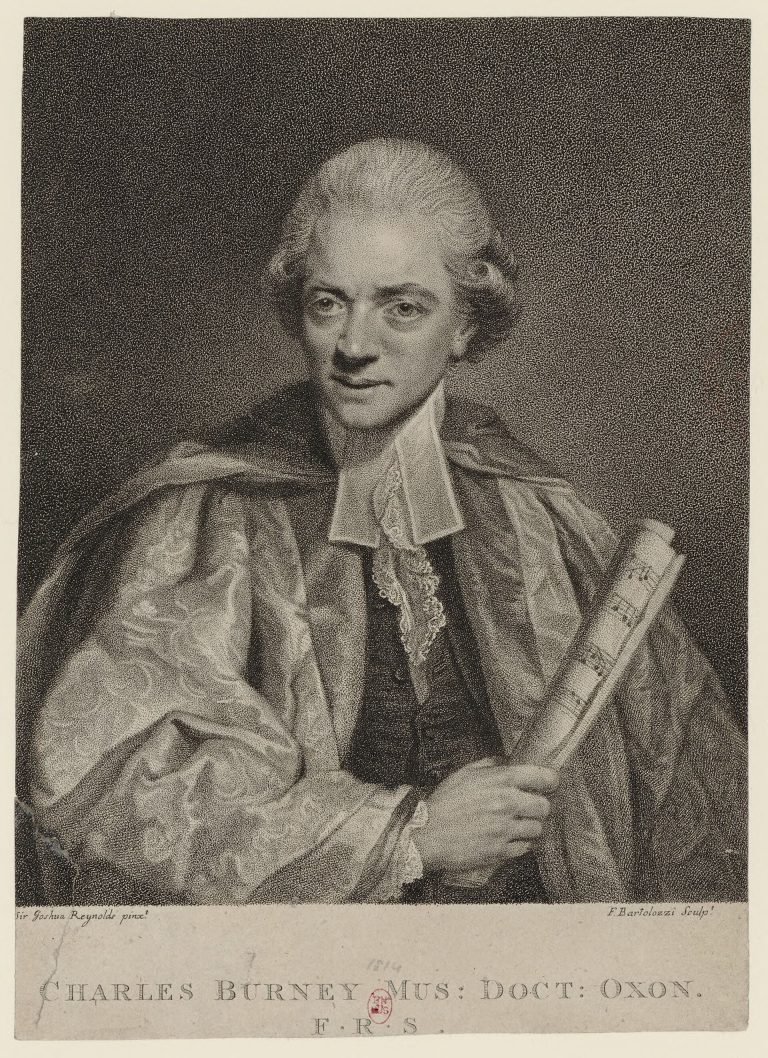
Then Burney climbs the stairs of Sant’Onofrio a Capuana, and what he writes ought to be read aloud at every board meeting of every Italian conservatory. In a single large room thirty or forty boys are studying different pieces at the same time. The beds serve as music stands for the harpsichordists. The cellos are in another room, the flutes and oboes in yet another, and the clarini and trumpets have been exiled to the stairs and the upper floors, because there was no way to contain them. Burney counts: of thirty or forty boys practising, only two were playing the same piece. The noise was monstrous. He notes it as a defect, and attributes to that din the lack of taste and precision he hears in these young men until they go to learn it elsewhere.
He was wrong, and the explanation arrives half a century later from a man who had been in the Neapolitan conservatories. In 1821 Emanuele Imbimbo published in Paris, with Firmin Didot, a pamphlet on mutual teaching applied to music, and in it he tells an episode that Fedele Fenaroli had related to him. When Joseph II, emperor of Austria, visited the Conservatory of Santa Maria di Loreto, he made the same observation as Burney: how do they keep from getting confused? They answered that the great number of voices and instruments in the same room produces a kind of hum made of indistinct sounds, impossible to make out by ear, and that this is precisely why each pupil can devote himself entirely to his own task. With two or three in a room it would not work: the sounds would be distinct, and attention would be diverted at every instant. The chaos was not a budgetary failing, it was a pedagogical device. Those boys were learning to defend their own line inside noise, which is, after all, the only thing asked of an orchestral musician every evening of his life.
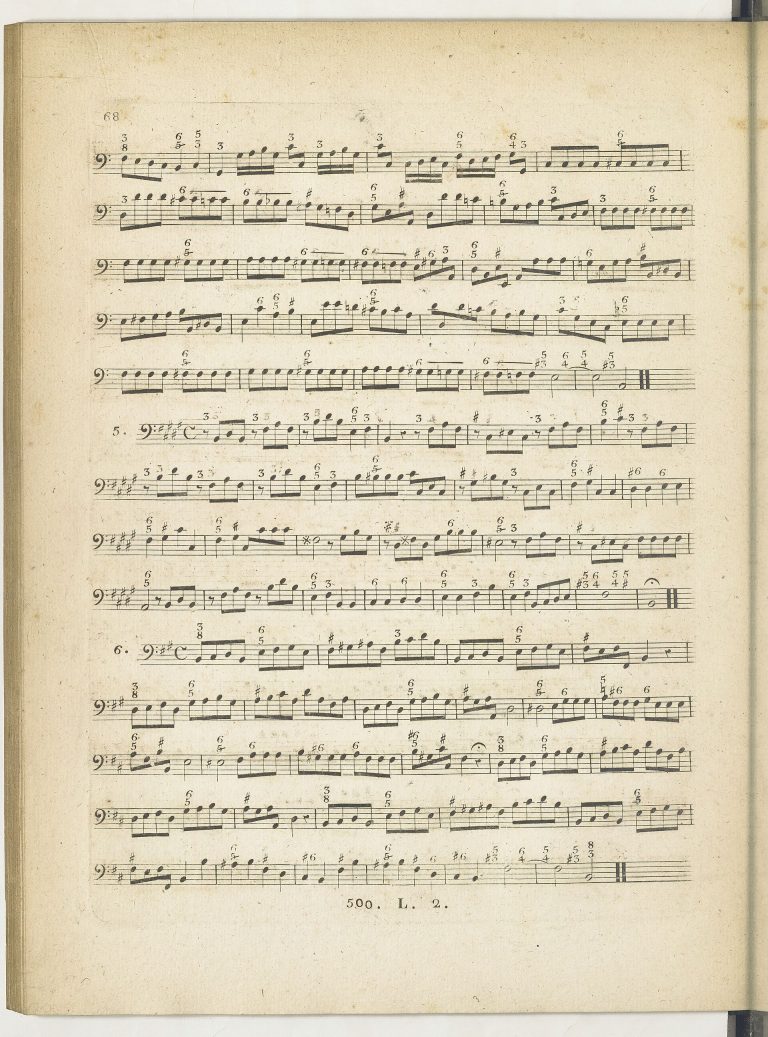
The method had a name and a hierarchy. The classes were four: elements, which included solfeggio, singing, partimenti and counterpoint. Partimenti were exercises on a bass, figured or bare, from which the boy had to derive at the harpsichord or organ everything else: the upper voices, the harmony, the imitation, the fugue. There was no manual explaining theory before practice. There was the bass, and there were the hands. Whoever looks today at a page of Fenaroli sees a single line of music and nothing else, and finds it hard to believe that that line was at once the exercise, the lesson and the exam.
Teaching was not done by the masters alone. In every conservatory there were two maestri di cappella: the first supervised and corrected the pupils’ compositions, the second gave individual lessons. Everything else passed through the boys themselves. The most advanced were called mastricelli, and had the youngest in their charge. The master arrived announced by the bell in the courtyard and examined the cartelle one by one, which were rectangles of varnished cloth ruled like music paper, on which one wrote and erased; he corrected in front of the whole class and explained the why of each correction. When the official lesson was over an unofficial one began: the older boys repeated to the younger ones the entire process of the examination. So it went on, day after day, until the senior mastricelli became masters and left, or stayed on as teachers, and others took their place.
The day was full from morning to the Ave Maria. At noon the bell called them to lunch, then recreation, then study and practice again until evening, and straight to bed. Anyone who went out to play outside had to return the moment he finished. Anyone who spent the night away was punished the next day. Those who did not come back at all had the constables sent after them, and once caught were put in jail. It was not a music school as we understand it. It was a closed boarding house, with a rule, and music was the work.

Now the part nobody likes to tell. In the same decade in which Burney climbs those stairs, Jérôme de Lalande travels through Italy and writes that in the conservatories of Naples they manufacture, façonnés is his word, little eunuchs who learn music. Almost all the castrati who sing in Italy, he notes, are prepared in Naples, where that amputation is performed with great skill. The economic mechanism he describes without circumlocution: impresarios pay a great deal for those voices, and so peasants and plebeians burdened with children turn to a surgeon and allow him to operate. Once the child has recovered, they bury him, the verb is his, in one of the conservatories, where he is poorly fed but where nothing is neglected so that he learns well. Several instruments are put before him, he chooses the one he feels most inclined to, and along with the instrument he is taught to compose. He does not leave the conservatory until he has written the music of a whole Mass.
In the regulations the operation was forbidden. De Lalande notes that little attention was paid to observing that ban, and he describes the loophole: parents took their son back home after the first notions of music, had him operated on outside, and as soon as the voice proved good brought him back in to continue his studies. The tally is kept by Di Giacomo, who went through the archives of the four conservatories one by one: ten times out of a hundred the operation, instead of changing the voice, made it vanish altogether. And it often happened that a voice announced as beautiful, and already used with success, disappeared suddenly after a few years. For those boys only one road remained, the priesthood. An enormous number of eighteenth-century Italian priests were made of men from whom everything had been taken in exchange for a career that never arrived.
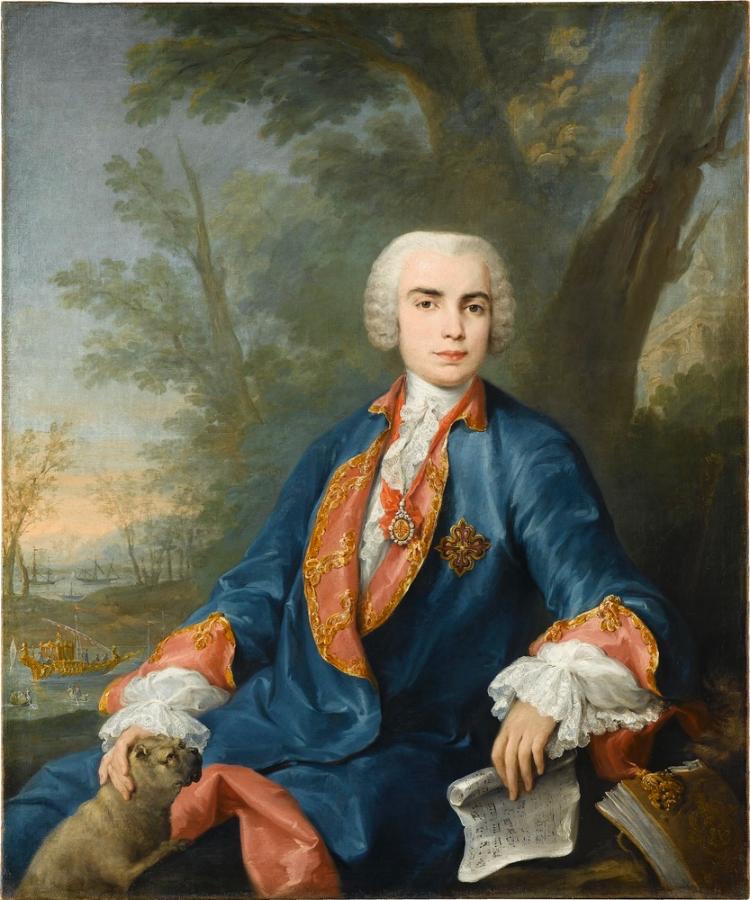
Inside Sant’Onofrio the sixteen young castrati had a whole wing to themselves, brighter, with warm, well-exposed rooms. Burney notes it, and explains the reason with the coolness of an administrator: having more delicate voices, they had to be spared colds, which would not only have damaged their studies but exposed them to the risk of losing their voices forever. They were the institution’s investment and were treated as such. The other forty were in the big room with the beds used as music stands.
Twenty years after Burney’s visit, around 1790, the boys of Sant’Onofrio were no longer ninety. They were thirty or a little more, and a single elderly master survived all his predecessors: Giacomo Insanguine, known as Monopoli, author of that Osteria di Marechiaro which had run for sixty nights in a row at the Fiorentini. The same thing was happening at the Pietà and at Santa Maria di Loreto. In twenty years the system that had trained Pergolesi, Jommelli, Paisiello, Cimarosa and Piccinni had lost two thirds of its pupils, and nobody in Naples, at that moment, would have dared to say so out loud.