

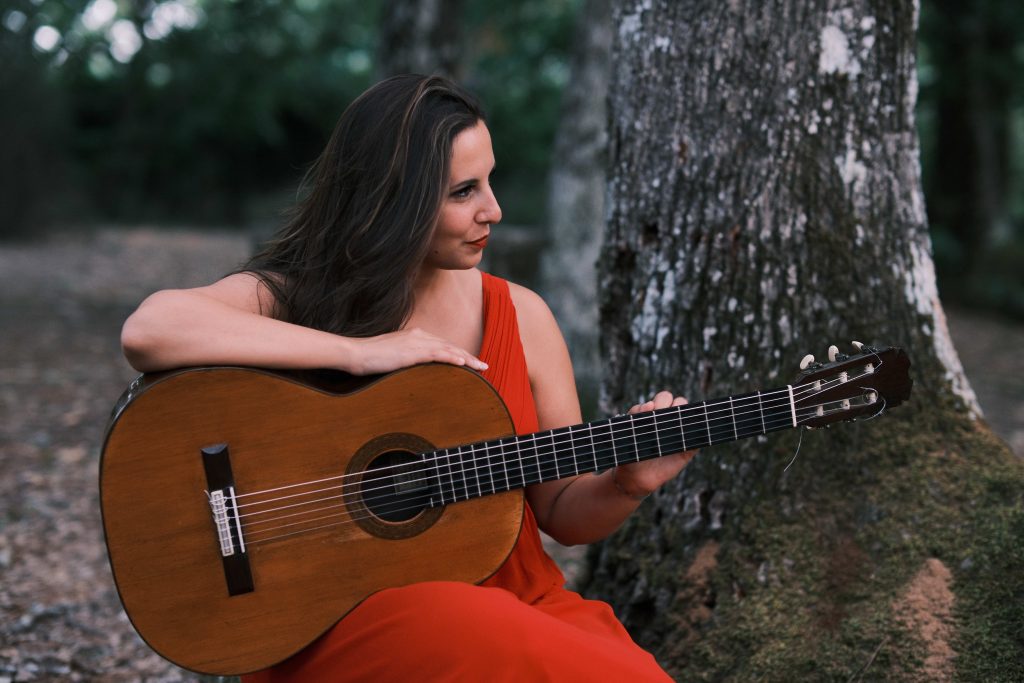
The guitar, she says, should be heard live first and judged afterward. Carlotta Dalia, from Tuscany, born in 1999, started at eight and by twelve was already on stage as a soloist. She trained with Oscar Ghiglia at the Accademia Chigiana and with Laura Young at the Mozarteum in Salzburg, made the world premiere recording of Ida Presti’s music for solo guitar and, for the album Segovia, played the Hauser built for the Spanish master. In September Paganini came out on Berlin Classics, with the Goldmund Quartett: five instruments that belonged to Paganini, played together for the first time, and the guitar is in her hands. She teaches at the Bergamo Conservatory and this year discovered flamenco on a 1952 Conde Hermanos. On Sunday 15 November, at 8 pm, in Sala Santa Cecilia for The Classical Rave Party, she will play Re-Birds, the piece Enrico Melozzi wrote for her.
You started at eight and gave your first solo concert at twelve. What is left of that little girl in the way you walk onstage today?
Many things have changed over the years, of course. But the feeling of the fingerboard under my fingers is what made me fall in love on the first day, and for me it remains essential. The years have gone by, and I love the guitar exactly as I did then.
You studied with Oscar Ghiglia at the Chigiana and then with Laura Young at the Mozarteum. What did these two schools give you that was different?
I’ve been lucky to study with a great many teachers of the highest level: besides the ones you mentioned, Alessandro Benedettelli, Carlo Marchione, Aniello Desiderio. Each of them gave me a lot. The most precious thing, I think, was having their support and then the freedom to be myself.
For Segovia you played the guitar that Hermann Hauser I built for Andrés Segovia. What did that instrument physically ask of you that your own guitar didn’t?
Andrés Segovia’s guitar is a truly unique instrument. The timbres of Hauser’s guitars are incredible, and they suggest precise solutions to the player in musical choices. Studying a certain repertoire on that guitar has certainly influenced my choices and my taste.
The album closes with Re-Birds, from a fragment of Rameau, which Enrico wrote for you. How did the piece come about, and what is it like to work with a living composer who knows how you play?
The piece Enrico wrote for me was born practically together with our friendship, and like the friendship it was immediate, spontaneous. I’m very grateful to him for giving his time and imagination to the classical guitar, and for choosing to dedicate this piece to me. I remember that a few weeks later it was already on the programme, on a tour in South America.
Segovia built the guitar repertoire by asking the composers of his time for music. Today, who should write for the guitar, and what do you ask of a composer when you commission a piece?
I think that in a composer’s eyes the guitar still has a lot of potential, especially in the chamber and symphonic repertoire. The repertoire commissioned by Segovia was almost all for solo guitar: there are also some concertos and quintets, but the proportion isn’t even. I believe strongly in spontaneity. I hope composers fall in love with the guitar sincerely and understand its real potential, its real worth. It’s still an instrument far too little known, and far too little regarded.
In 2019 you won the Paganini Competition in Parma, and in September the album Paganini came out with the Goldmund Quartett, who play the instruments that belonged to him. What kind of musician did you discover in the Paganini who wrote for the guitar?
For the guitar Paganini wrote short pieces, a sonata and a good deal of chamber music. The guitar of his day was a very different instrument from today’s: it had a round sound, but much less projection. And in fact the one I play on the album is one of the guitars that belonged to him. Among his best-known pages for guitar are the Ghiribizzi, a collection of short pieces, often inspired by famous melodies of the time. For Paganini the guitar was a travelling companion: when needed it stood in for the piano when he arranged orchestral parts, and it was the instrument he didn’t play in public but that always went with him. Discovering Paganini the guitarist means discovering a side of this artist that you wouldn’t even imagine.
On that album you play the Sonata in A major for solo violin transcribed for guitar. How do you bring onto six plucked strings writing conceived for the bow?
The transcription is by Manuel Barrueco, and the curious thing is that here it was Paganini himself who drew inspiration from the guitar. You travel the road in reverse, in a way. The classical guitar has a lot of transcribed repertoire, and I believe that at the root of a good interpretation there is always the original, which you take as inspiration while making sure the guitar’s peculiarities become a strength, never a disadvantage or a point of comparison.
You made the world premiere recording of Ida Presti’s music for solo guitar. Why has Presti been forgotten for so long?
Ida Presti was a great performer, and in the years when she played around the world she was famous: an exquisite musician, who died too young. Many of the pieces she composed were published after her death by her students, to whom she gave her scores.
She should be remembered differently, and with greater regard.
The guitar has a small sound and halls are big. How do you tackle a space like Sala Santa Cecilia, and how do you feel about amplification?
I don’t quite agree on that. Today the guitar doesn’t have a small sound. I often play with an orchestra without amplification, and last February I recorded the Concierto de Aranjuez live with the Royal Liverpool Philharmonic, all without amplification. Of course, it depends on many factors, and every now and then amplification doesn’t hurt, but today’s guitar making lets us be fairly free. It also depends on the player, and there are exceptions. But I believe the guitar should be heard live first, and then judged.
You’ve said it’s better to practise four or five hours truly focused than eight with your head elsewhere, and that anxiety is an excess of attention directed at the future. How do you train presence, even before the fingers?
The mind has an incredible weight: it can make the fingers fly or lock them. Today, partly because of social media, we often live in a world that isn’t “here and now”. Living in the present is a choice you make every second, and I have to admit it’s very hard, even for me, who writes these fine words. Like everything, you train it with consistency and awareness.
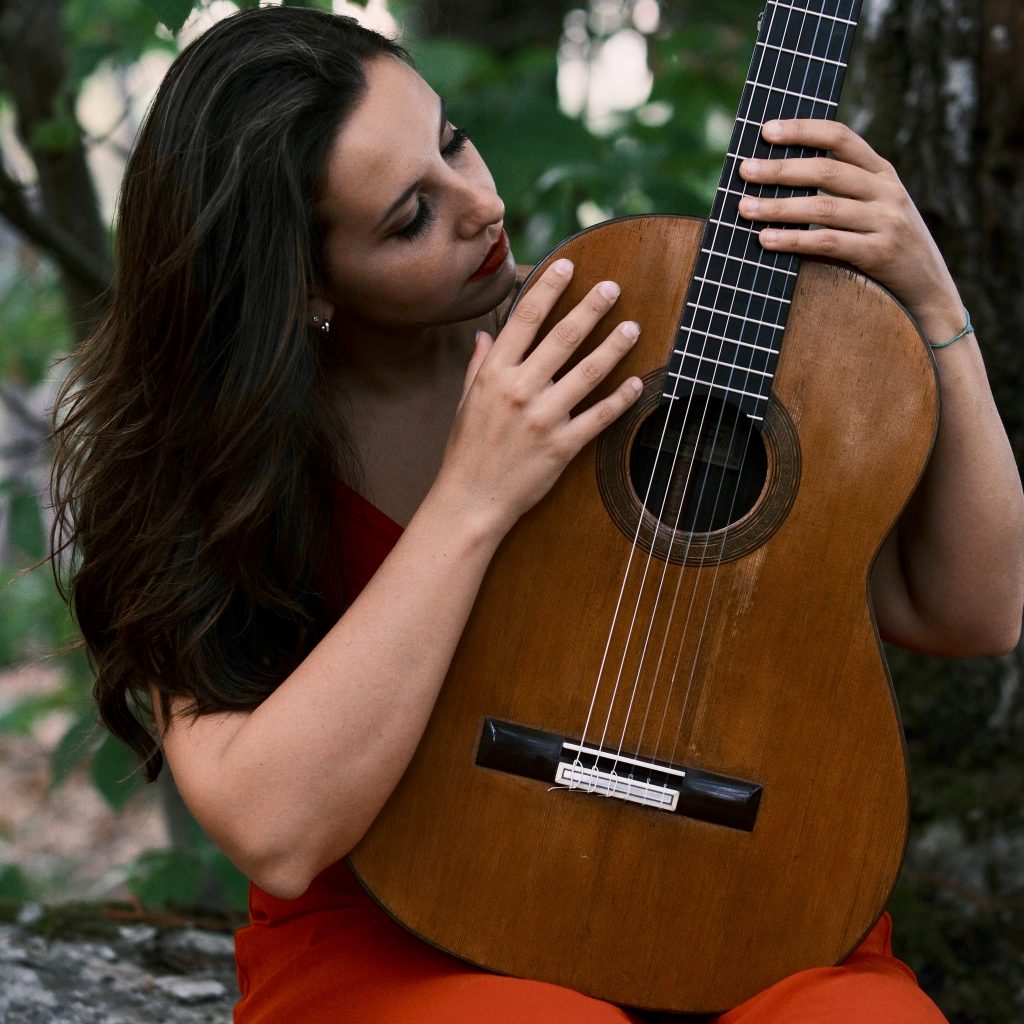
Nails, fingertips, back: for a guitarist the body needs care every day. What do you do for your hands, and what have you learned from fatigue?
Sport helps enormously, even if it’s hard to be consistent when travelling. There’s nothing better for protecting the back and the joints. And it’s a great outlet for the mind.
Since 2024 you’ve taught at the Bergamo Conservatory. How do kids raised on tutorials and thirty-second videos arrive in class?
I started teaching at a conservatory at twenty-two, and many of my students were my peers or people a good deal older than me. In many I see the same love for the guitar that I have, in others a lot of immaturity, which, combined with this new world of social media, doesn’t help. Music is perhaps the one thing no artificial intelligence will be able to replace, because there is something in it that can’t be reproduced through a screen and that needs live emotion. Many of my students perhaps lack this: switching the phone off a bit and looking more at what’s in front of their eyes.
You also play a 1952 Conde Hermanos that comes from the world of flamenco. How much do you need the popular side of the guitar, and where do you keep it in your repertoire?
This year I discovered a side of my playing that I had never explored, and that has renewed my love for this instrument. Playing Paco de Lucía’s music on one of the instruments built by his trusted luthiers has been hugely inspiring: a way to learn new techniques and to look with different eyes at the classical repertoire too.
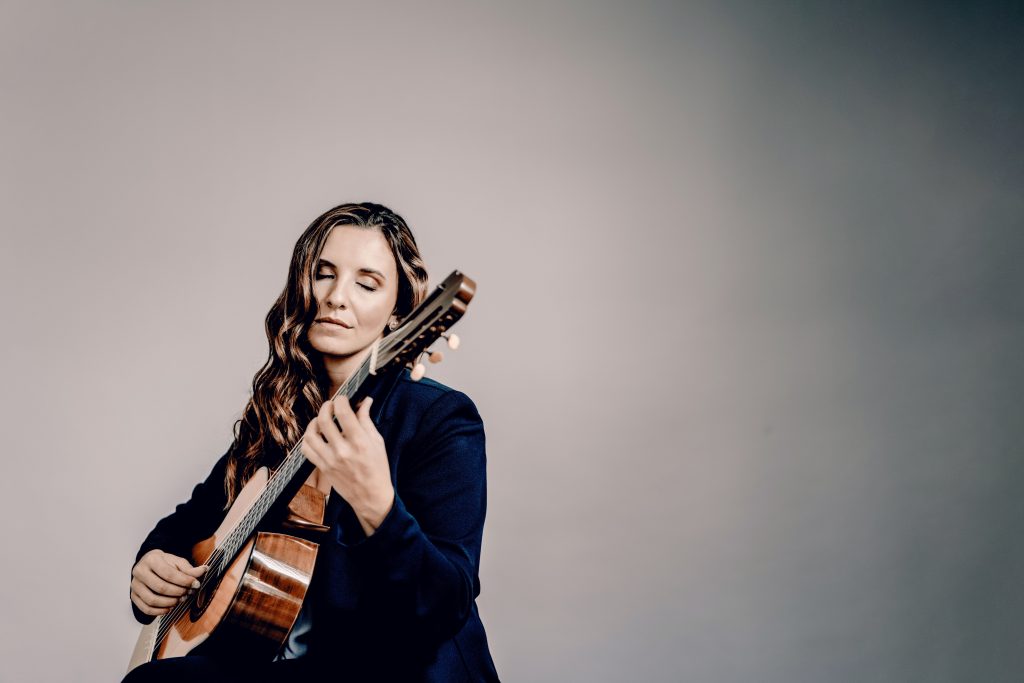
On 15 November, what will you play? And what do you expect from a concert hall turned into a rave, where silence isn’t guaranteed?
I’ll play the piece Enrico dedicated to me. I can’t wait, because that music can create a tremendous atmosphere, and I’m sure it will win for itself the silence and attention it deserves. Even if it isn’t written in the score, the mysterious silence of the audience is part of those very notes.
The Classical Rave Party, Sunday 15 November 2026, 8 pm, Sala Santa Cecilia, Auditorium Parco della Musica, Rome. Romaeuropa Festival.