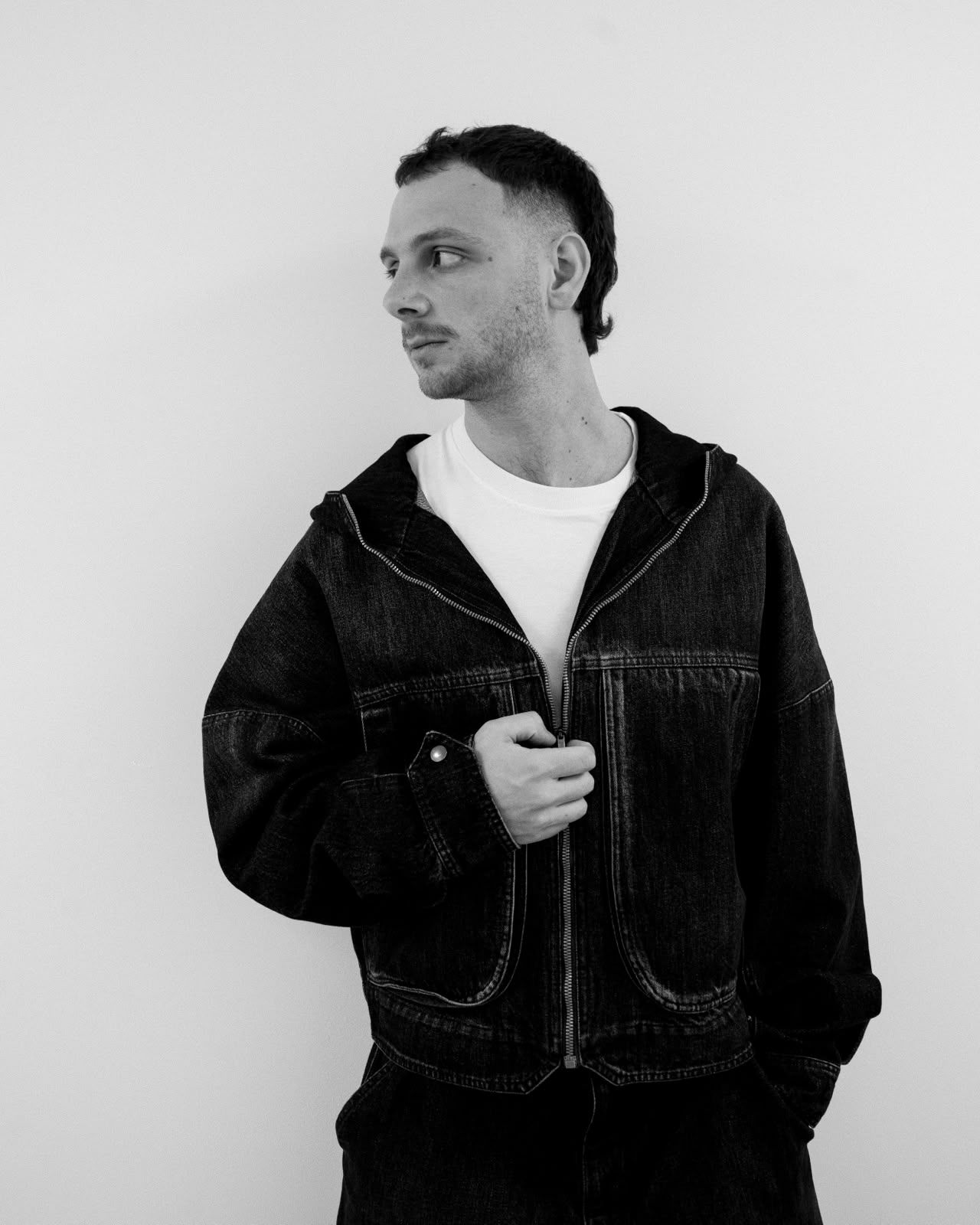
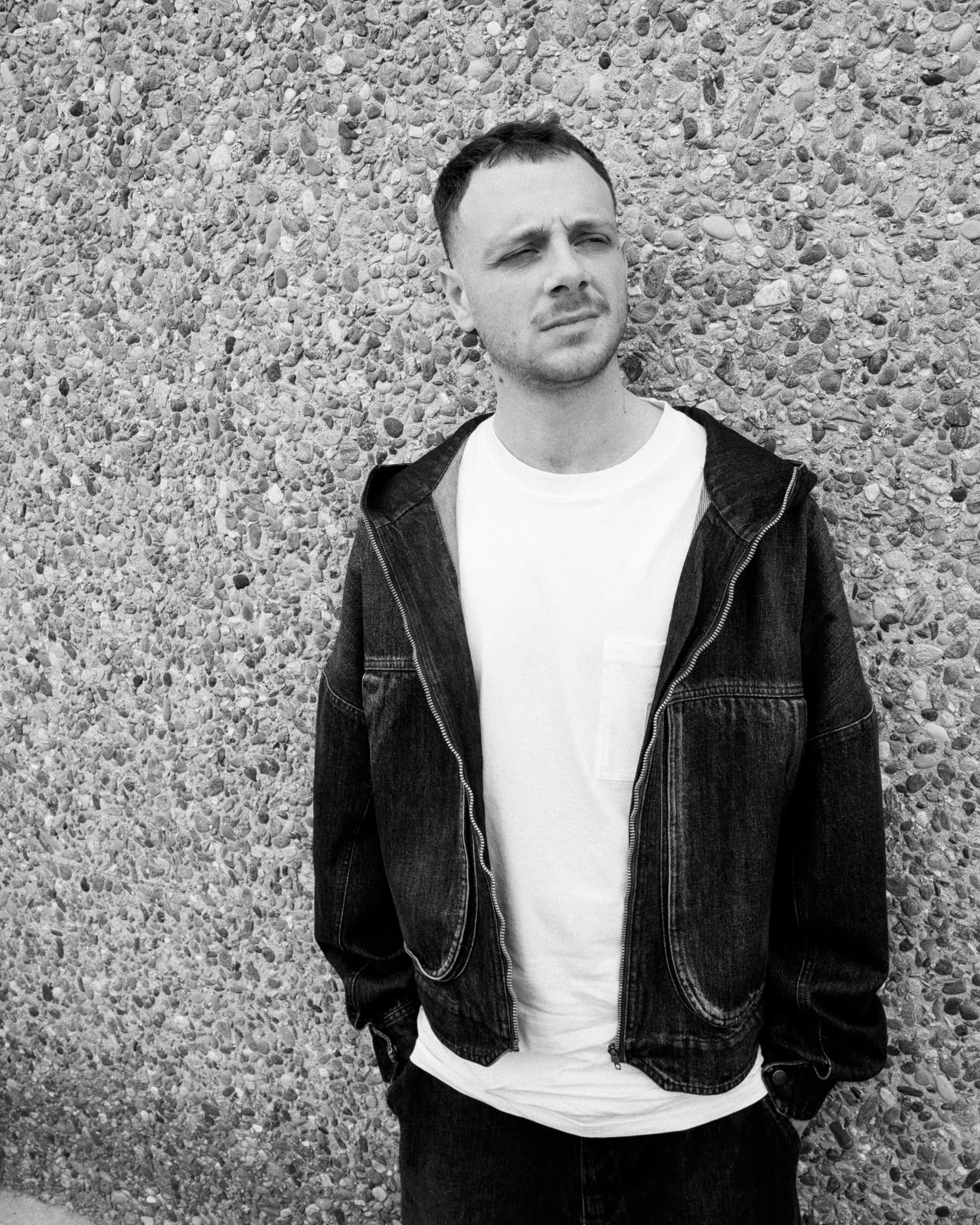
In 2018, at the X Factor auditions, Marco Anastasio took De Gregori’s Generale and rewrote it from the inside, with no fear of falling short; he went on to win that season with a song of his own, La fine del mondo (The End of the World). From his classical high school he carried away the sonnets in hendecasyllables a teacher used to set as homework, in the very years when he was starting to rap. In 2020 he sang Rosso di rabbia (Red with Rage) on the Ariston stage with Enrico Melozzi on the podium; in 2025 he released Le macchine non possono pregare (Machines Cannot Pray), an album built like a story, which also became a graphic novel and a concert with spoken parts. He loves the stumble, the rhyme that lands where you least expect it, and on poetry he holds a clear view: in fiction he likes what he understands, in poetry what he does not. On Sunday 15 November, at 8 pm, he will be in the Sala Santa Cecilia for The Classical Rave Party.
At the X Factor auditions you rewrote De Gregori’s Generale. What did it teach you, back then, to step inside someone else’s lyrics and change them from within?
The fundamental thing I learned by rewriting Generale is that when you approach a song of that stature and do such an aggressive job of rewriting, there is no point in letting the fear of falling short scare you. You have to focus instead on how much power is already there, and extend the conversation. First of all you have to get into the mindset that songs are living things, which you are allowed to play with. In songs there is no such thing as heresy.
You went to a classical high school. What has stayed with you in the way you build a line: the metre, the rhetoric, the taste for quotation?
What I carried away from classical high school was above all the metre, because I had a teacher who made us study it with precision: for homework, for example, he would have us write sonnets in hendecasyllables. In the same period I was starting to rap, and I realised what important training it was. The ability to produce a line on the spot, metrically correct, is the foundation of rap. That is the direct legacy. The rest is indirect: any kind of study, even far removed from what I do, has in some way fertilised my brain.
Le macchine non possono pregare opens with a prayer and closes with rain. How do you build a long form in twelve chapters when your starting language is the single track?
Le macchine non possono pregare was a very complex writing operation, partly because it stretched across several languages: out of it we drew a comic book and a concert that was a kind of crossover with a stage play. The key point is this: when you write an album with a story in mind, and every song is designed even before it is written, you have to find the balance between the plan and instinct, pure artistic improvisation, because all writing is, in some way, sudden. We sit halfway between the two forms art takes: the sudden one, which surprises you while you are writing it, and the elaborate one. The trick is not to sacrifice poetry on the altar of narrative, or the other way round.
You have said that your algorithm-god can understand a story, but not poetic language. Where, for you, does the line fall between telling a story and making poetry?
In this story the algorithm-god lacks the ability to understand symbolic language, allegories, references, echoes, everything the sacred and human experience feed on, which is not only mathematics. The cyclops, on the other hand, understands only mathematics, logic, cause and effect, and that is what drives him mad: he needs coherence and, when coherence fails, he implodes. But it is precisely when mathematical logic is lost that the most interesting part of art begins, which is poetry. Storytelling needs a certain rigour, perhaps not always, because the two things blend; poetry can do without it. I would put it this way: in fiction I like what I understand, in poetry I like what I do not understand.
On the album there are the rebels of 1848 shooting at the clocks. What is your relationship with musical time, with the metronome and the grid rap is written on today?
I have always liked the stumble. Rap has a rhythm that varies little: the bpm stay fixed for the whole track, and the pattern is always the same too, the famous boom bap, with kicks and snares landing more or less in the same spot. The interesting thing a rapper can do is stumble over the beat, let the rhyme fall where you do not expect it. Then I am interested in the experiment of writing over instrumentals that are not typically pop: I did a track with Bollani, Tubature (Pipes), which runs on jazz tempos and a very free structure.
That said, rap, like song, tends to give the listener at least a minimum of security. I bet on words and on meaning, and very often I need order in the time so that the words can create their own.
Baudelaire watched Paris change and wrote The Swan. Who are the poets you read while you write, and what do you take from them?
I have to name two above all. The first is Davide Nota, a contemporary poet, my friend and above all a great influence: with him I wrote Le macchine non possono pregare, which was born precisely from an intuition of his. We did a beautiful job of comparing notes on the lyrics and, even more, on the concept, on the scaffolding of the album. It was Davide who led me to discover Massimo Ferretti: I set one of Ferretti’s poems to music, Polemica per un’epopea tascabile, which on the album became Solo un animale ferito (Only a Wounded Animal). Ferretti is the poet who has reached me more than any other, so much so that many of his lines have given birth to my songs.
You graduated in Agricultural Sciences and went back to live in Meta. What has changed in your writing since the land became a study as well?
I graduated in Agricultural Sciences in 2024 and went back to Meta for a couple of years, although I am moving to Rome: in 2027 I will be a Roman. The truth is I do not have a place of my own in the world, I stay where I like, and I have that good fortune. I do not know whether studying the land has directly influenced what I write; indirectly it has, like everything. I studied agriculture because I had the dream of returning to the land, to simplicity, and that is the same thing I try to bring into my songs.
You paired the album with a graphic novel and you speak of the live show as a story told in images. Does the classical concert, with its fixed liturgy, strike you as a limit or a model?
I do not think the concert is a limit in itself. It is a canonised form, and I have nothing against canons; it is just that I am not faithful to them. I see no value in liturgy: the value lies in originality. This time, in the live show, we included spoken parts, and it was not a classical concert, but the album asked for it. From birth, Le macchine non possono pregare had the ambition to be a complex story, and the stage seemed to us the right channel to bring it to life and unfold it to the end. We answered a need, as we did with the graphic novel: we thought about what that medium could offer to enrich the story further. In the end, everything served that purpose.
In 2020, at Sanremo, you sang Rosso di rabbia with the orchestra and with Enrico on the podium. What was it like to hear your rage played by an orchestra?
On stage I am fairly methodical: I try to give my best in any situation, whether it is Sanremo with the orchestra or a more intimate setting. The orchestra certainly gives you a major boost, but I think the big difference is felt above all by the audience: what comes across to the outside matters far more than what I feel. And here I get technical. In the in-ears the orchestra does not arrive in its full force: you hear it, but squashed, not the way it sounds live.
A few months later, in L’Aquila and in Macerata, you were on stage with the Orchestra Notturna Clandestina among Mozart, Purcell, Nirvana and a spoken Don Giovanni. What did you understand about Mozart on those evenings?
The great lesson of Melozzi, and of the way he chooses the pieces for the Orchestra Notturna Clandestina, is that Mozart and Nirvana coexist, they belong to the same category. The idea that classical music is separate from contemporary music is nothing but a preconception.
The rap word lives on the beat and on the syllable. An orchestra breathes, slows down, opens out. How do you hold the flow when the time beneath you is not a machine?
It is interesting when I find myself facing something that does not follow a fixed tempo, because that is where you switch to instinct: you have to coordinate with the orchestra and become, in some way, an orchestra player yourself. What dictates is no longer the fixed, caged tempo. It has to be said, though, that every time I have performed pieces with an orchestra, the orchestra was still following a bpm, a metronome.
On 15 November you will be in the Sala Santa Cecilia turned into a rave, with the Orchestra Notturna Clandestina. What will you bring, and what changes for your voice when you sing with an orchestra in front of an audience that may never have heard you?
Playing with an orchestra is a great thing for me, it gives me a real boost. I feel charged and responsible, as if I had to give more so as not to fall short next to the orchestra; the truth, though, is that I give my best in every situation, with the orchestra or with backing tracks. And an audience that does not know me I experience as an opportunity: it does not make me anxious, it does not scare me.
You have said you belong to the niche and not to the mainstream. What audience would you like to find in a concert hall, and what do you ask of it?
Actually I am a bit of a hybrid: I was born in the mainstream, then I moved towards something freer, which only the niche allows you. But from whoever listens to me, mainstream or niche, I always ask the same thing: curiosity, to listen to me with an open mind. In my tracks I often push into unexplored and not always easy territory, and the listener has to be well disposed to really enjoy a song of that kind. I realise that an album like Le macchine non possono pregare is not suited to every kind of listening: you cannot put it on in the background, you have to listen to it because you want to, because you are curious.