

Marta Sollima started writing songs at eleven, in Palermo, and now, at thirty, she is singing them on record for the first time. The album is called I Was Born Irregular and it is her debut: the arrangements are by her father, Giovanni Sollima, who put marimba, mandolin and harp where she never would have expected them, the drums and electronics are by Giovanni Giorgi, and Paolo Fresu is on it too. The granddaughter of Letizia Battaglia, she went from the Brass Group in Palermo to the Brera Academy and NABA in Milan. She calls herself instinctive, allergic to school, and she writes in images rather than stories, because the meaning, perhaps, she would rather keep secret. On Sunday 15 November, at 8 pm, in Sala Santa Cecilia for The Classical Rave Party, she will bring Embracing the Water to the stage with the Orchestra Notturna Clandestina: the song that gave the record its title and stayed off it, because it asked for an orchestra.
You started writing songs at eleven or twelve, and you called that relationship with music lifesaving. What is it like to sing, today, words written by a young girl?
It’s a cathartic feeling. Singing and recording for the first time, now that I’m thirty, songs I wrote many years ago puts me in touch with my teenage self. I’ve grown up, inevitably, and so this work becomes a real interpretation of the ideas and feelings of back then, which I respect today and try to preserve without judgement.
The teenage Marta is still inside me: there was never a clean break. My musical project runs through time and lives in continuity with the other “eras” of my life.
In As a Midnight Bird (in a Nightmare) you had to move the refrain an octave lower, because your voice had changed. What did you lose, and what did you find, in that lower octave?
When I recorded my first album I found it interesting to have to adapt the songs to a different voice, lower than the one I had when I wrote them. But I didn’t want to give up the high octave: in the refrain I overdubbed the voice in the high octave over the one in the low octave, which carries the words of the lyrics. To my ear that high octave sounded like an accompaniment, perhaps a slightly angelic one, to the low, “spoken” voice.
The title I Was Born Irregular comes from the chorus of a song you left off the album. Why keep the phrase and give up the song?
I Was Born Irregular comes precisely from the chorus of the piece I’ll sing on 15 November. I left it off the album because the arrangement, conceived for orchestra, would have turned out quite different from the other tracks. I preferred to wait for the right setting for that song, which is called Embracing the Water.
The phrase, though, evoked a strong image for me, emblematic of the lived experience I tried to bring out in the lyrics, however abstract, and in the music of the album.
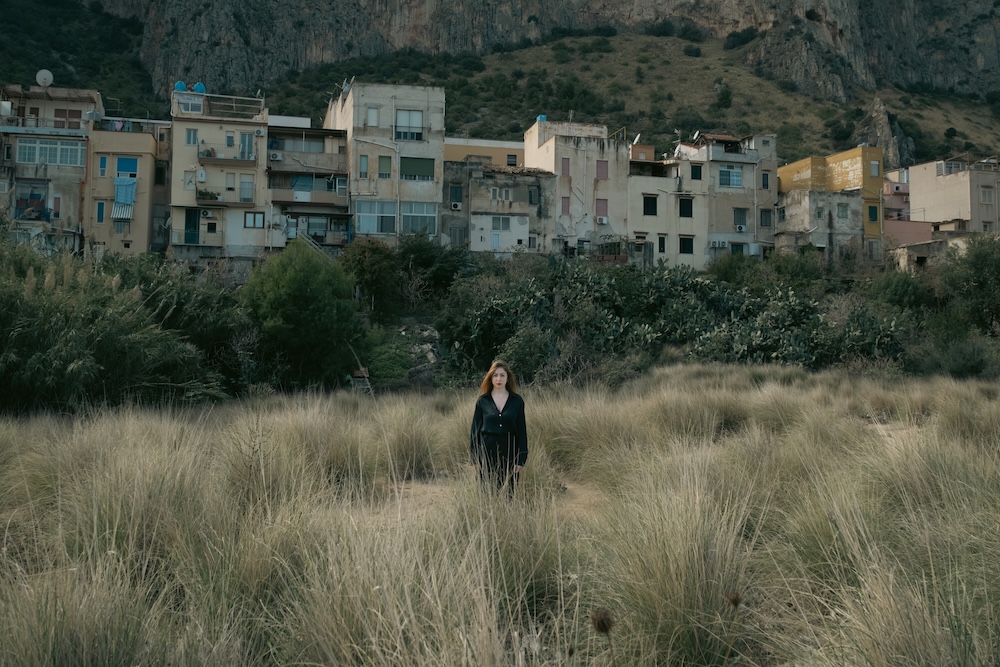
You asked your father to arrange your songs. What is it like to work with an arranger who has known your voice since before you started singing? Was there a point where you said no to him?
It was an incredible experience, on an emotional level. My father knew how to interpret my songs, adding colours and interventions that were even unpredictable, while fully respecting their original nature. I’m thinking of A Software in the Sea, where he wrote for marimba, mandolin and harp, which at times cut in on one another. I never would have expected it, and the result was brilliant.
He has a respectful ability to make his contribution, always personal and recognisable, without distorting or overpowering other people’s ideas. When I first heard his arrangements I was deeply moved: I felt profoundly recognised.
I asked him to revisit the arrangement of just one piece, this time in Italian, which perhaps I had imagined a little differently. But it’s really one case among many songs.
You’ve said that Giovanni Giorgi’s drums and electronics had to follow the story almost like a film. How do you direct the sound of a record, track by track?
When Giovanni Giorgi came on board, almost by magic I’d say, the tracks were already largely recorded and the atmospheres were already there. But he brought colours and a force that, the way I see it, enriched the potential of the songs, and he did it with great creativity, without limits. He too recognised me deeply.
In practice I don’t really know how you direct the sound of a record. It was certainly collective work, a bit like a film, with many creatives. I brought the skeleton, the bone structure of the songs: the music and the lyrics. Then my father dressed and coloured them, and so did Giovanni Giorgi, and so did Paolo Fresu.
It’s wonderful to work in a group, especially when you feel understood.
You studied harmony with Marco Tutino and Marco Betta, and voice and jazz at the Brass Group in Palermo. What did the discipline of school give you, and where did you choose to disobey it?
I admit it, I’m afraid I’m a little allergic to “technical” music teaching: it has always been a struggle for me. I’m instinctive. I recognise myself, metaphorically, in those figures who picked up a guitar and wrote following nothing but instinct.
Even today I couldn’t tell you what I got out of studying music. Perhaps, in my writing, I’ve always been a little disobedient.
Björk, Gentle Giant, Genesis, Patti Smith. Which of these records first made you realise that a song can break its own form?
Listening to Selling England by the Pound at seventeen was a powerful experience, like the Doors’ Riders on the Storm at twelve, or Björk’s Vespertine in those same years.
In the first case, the prog era gave me the idea of music without borders, without limits, which can speak to you in the most varied ways and languages, unafraid of labels, diktats, judgements. And it moved me to know that in the Seventies there was a large audience willing to love that freedom. With Björk, instead, I found it fantastic to discover that a “pop” artist could break the rules of the genre and push into experimental territory.
That’s it: I’m interested in experimentation, in the possibility of stepping outside the boundaries and the scripts laid down for a genre and a context. I’m interested in wonder, in the search.
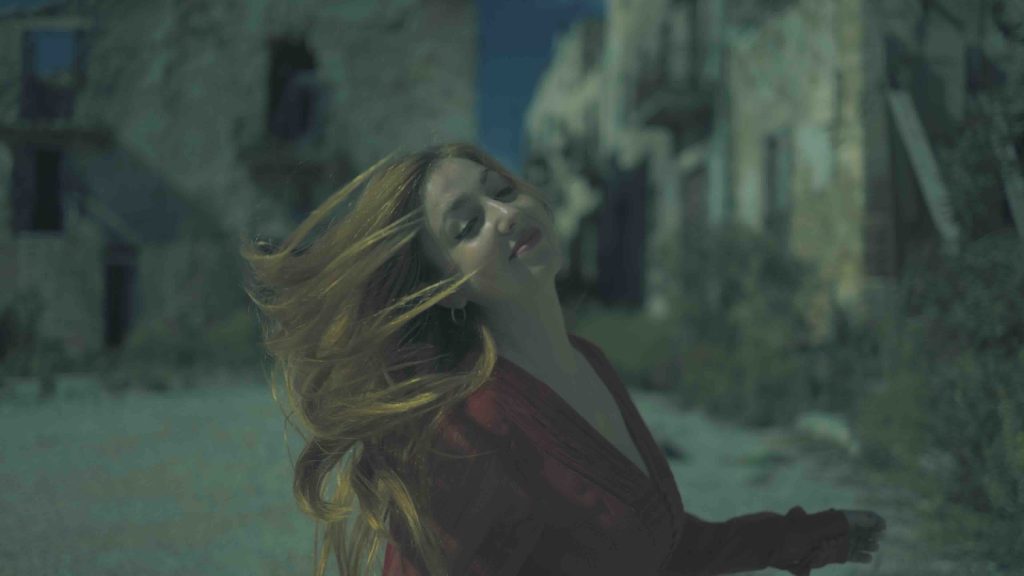
You say that when you compose you are guided by the need to stay close to the wild, ancestral, cathartic side. Where does that side physically live while you sing: in the breath, the throat, the stomach?
Yes: in the breath, the throat, the stomach. And in images. Imagining situations, spaces, faces while I sing helps me enter another dimension, detach from the earthly world and become something different. It’s my greatest space of freedom.
You come from Brera and from curatorial studies at NABA, and you say your lyrics evoke images rather than tell stories. Do you write a song the way you edit a film or the way you stage an exhibition?
I think cinema has influenced the atmosphere of my songs, and my writing itself, more than the exhibitions I’ve visited. There isn’t just one way to make an exhibition or to present a work of art, but on a sensory level the experience of cinema seems more powerful to me.
From cinema, though, I didn’t take the centrality of stories: I took the power of images. My lyrics merely evoke stories through abstract images, a bit as if you set side by side fragments taken from different films, which in the end generate an immaterial narrative.
I think, deep down, that I don’t want to be understood in the meaning of what I tell. Perhaps I want the meaning to stay secret, and abstract images help me keep a measure of privacy.
The video for Remembering Sadness was shot among ruins left by an earthquake. Why real rubble for a song about melancholy?
Rubble evokes drama, violent rupture, a break with the past. In the song, though, melancholy alternates with irony and with a march. I was interested in seeing how moods so different could enter into dialogue with an unmistakably tragic image.
Villa Garibaldi, Piazza Verdi, the countryside around Menfi: Sicily is on the record even though you never name it. What is Palermo like when you listen to it from Milan?
When I listen to it, Palermo is visual and abstract at once. I manage to “empty” it of what really goes on there: the news, the institutional figures, the politics, the musicians, its people, the markets, the monuments. What stayed with me is a mood, an atmosphere, a feeling tied to the city.
You interviewed your grandmother Letizia Battaglia and wrote a portrait of her. What did you learn from her way of getting close to things in order to photograph them, and does it help when you write music?
From my grandmother I learned, perhaps without realising it, the necessity of art: the unavoidable need to use art to tell my own story. Not ambition, not the desire for fame and recognition, but the necessity of being able to express myself, like the need to drink, to eat, to be loved.
For the live show you’re thinking of a small ensemble and samples. How do you bring a record full of overdubs onto a stage without betraying it?
It’s a question I’m still asking myself. I’d rather take the album on the road once I’ve found the best way to let people hear it without distorting it.
I remain open, though, to any stimulus, any idea. I find it interesting to give the songs new clothes and new colours, a bit as happened with the arrangements, as long as their structure and original atmospheres are respected.
On 15 November you’ll be in Sala Santa Cecilia with the Orchestra Notturna Clandestina. What will you bring to the stage, and what do you expect from a concert hall turned into a rave?
I’ll bring Embracing the Water, a piece I wrote at nineteen, just after I had moved to Milan. I composed it in a tiny room, and my father arranged it for orchestra. That contrast, a minuscule room and an enormous ensemble, makes me smile today.
In the lyrics I imagine a world beyond the horizon, while I’m standing on a Mediterranean beach. I hope all these elements, the rave, the horizon, the Mediterranean, the orchestra, the concert hall, even the small room in Milan, can blend into one another and become a single whole.