

On 6 December 1791, a Tuesday, the body of Wolfgang Amadeus Mozart left the Rauhensteingasse and crossed Vienna towards the cemetery of Sankt Marx. He had died the day before, at five minutes to one in the morning. He was thirty-five. In the register of St Stephen’s Cathedral the funeral is recorded as third class, and the burial took place in what Viennese documents call an allgemeines Grab, a common grave. On this phrase, which in English sounds like a condemnation, the set piece of Western music has been built for two centuries: the greatest genius of all thrown into a pit with the unknown, nobody behind the hearse, the snowstorm scattering the few who remained. Every element of that scene can be checked. Almost none of it survives the checking.
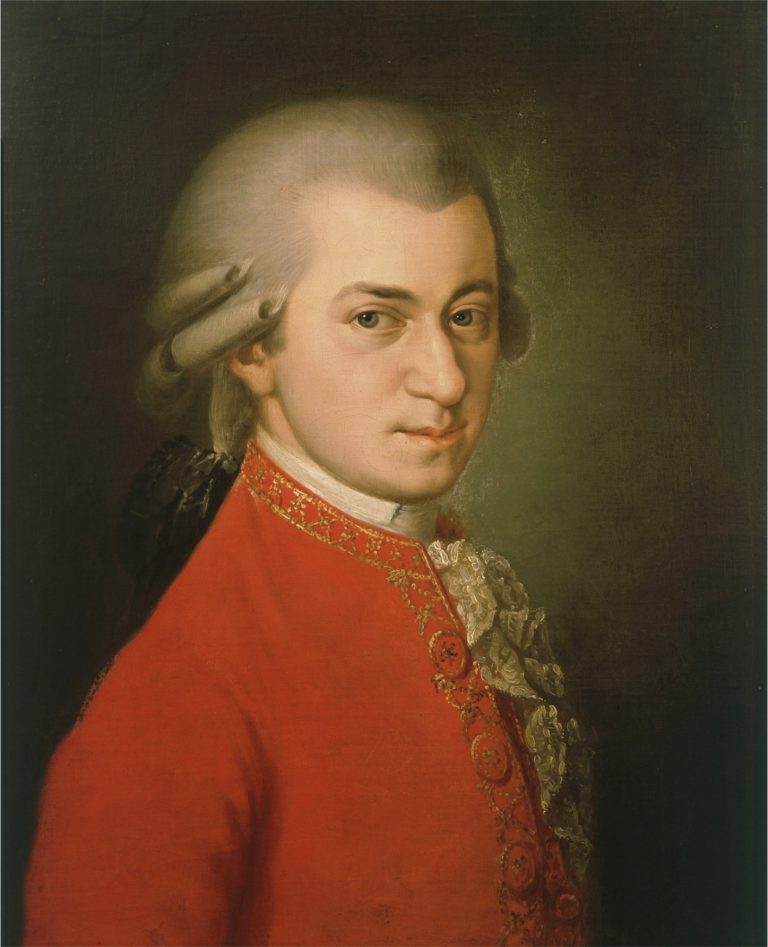
Let’s begin with the word. In German allgemeines Grab does not mean pauper’s grave, it means ordinary grave: the normal burial of a citizen who does not belong to the nobility and has not bought a plot of his own. In Vienna, that December, it was the burial of the vast majority of the dead. Individual tombs with a headstone were the exception, reserved for those who could pay for the ground and maintain it; everyone else ended up in graves that the municipality had the right to reopen after ten years and reuse. It was not a punishment, it was the regulation. The baker’s brother, the civil servant, the shopkeeper and the composer to the imperial court followed the same procedure, and they followed it because the emperor had decided so.
The decree is dated 23 August 1784 and bears the signature of Joseph II, the sovereign who in ten years reformed everything he could lay his hands on, from convents to hospitals to cemeteries. The logic was hygienic and fiscal at once. The dead were to leave the churches and the city walls, cemeteries were to be moved outside the city, and burial was to cost the community as little as possible. The text provided that corpses be sewn into linen sacks, lowered naked into the grave and covered with quicklime; the coffin served only for transport and went back for the next dead person. Individual headstones were forbidden. Anyone reading those lines today understands at once why the legend took root: it seems written expressly to make us imagine Mozart stuffed into a sack.
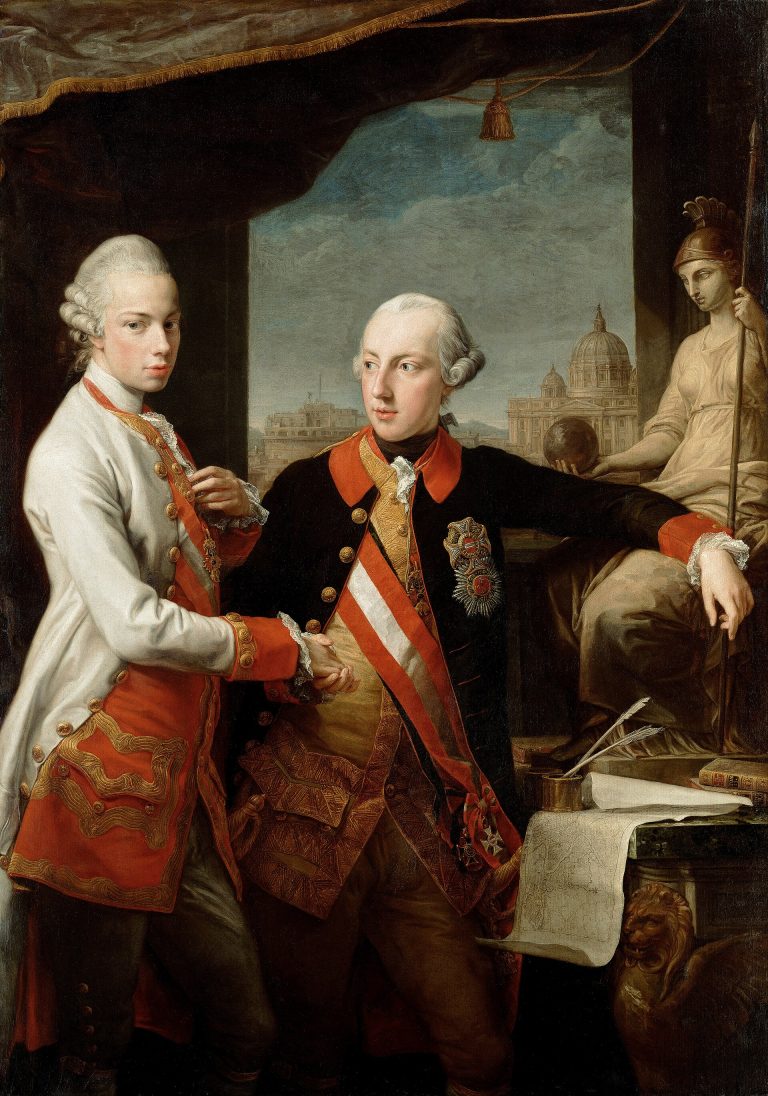
Except that in Vienna that regulation never came into force in the form everyone cites. The city council removed from the official publication the paragraphs imposing the sack and the reusable coffin, because the Viennese protested with a violence that surprised the government: in the city’s memory the body lowered naked into lime was the image of plague burials, and nobody was willing to accept it for his own father. Joseph II, who was not a man to turn back easily, turned back. On 20 January 1785, five months later, a new decree established that anyone could be buried in a coffin. By the time Mozart died, in December 1791, the reusable coffin was a rule that had been abrogated for almost seven years. The Viennese researcher Michael Lorenz, who has spent his life inside the municipal archive, has documented it line by line.
That leaves the money, and here the ground gets slippery, because the papers on the expenses of Mozart’s funeral have been lost. We do have, however, the accounts of his neighbours, which are the closest thing to a point of comparison. Christoph Dopler, who lived in the same area and died in May 1789, had a coffin costing one florin and thirty kreuzer, invoiced by the carpenter Joseph Haiss and dated 12 May, and a third-class burial that cost six florins and forty-five in all. Christina Ponschab, the following year, had a coffin of four florins. These are the figures of an urban middle class, not of a destitute person. Third class was the class of the majority, and the majority in Vienna was not poor: it was normal.
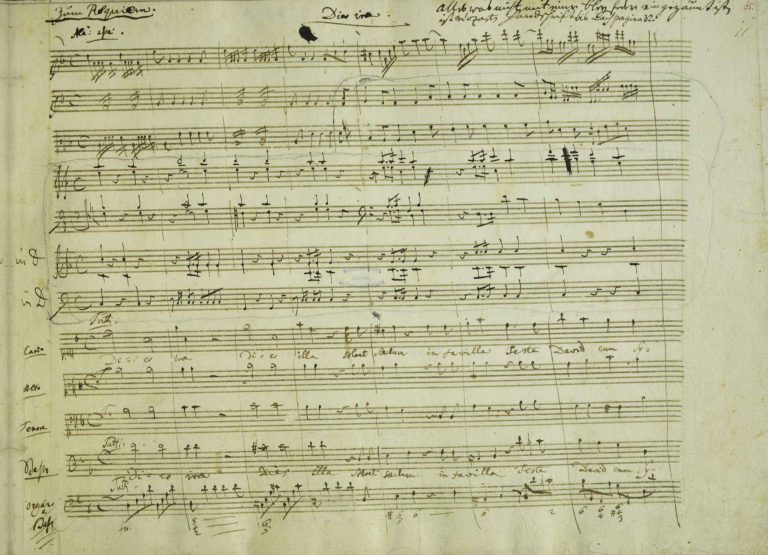
The storm goes too. The version with the wind, the snow and the few mourners turning back halfway goes back to the account of a certain Joseph Deiner, collected and printed decades later, and it has all the look of memory constructed after the fact around a story that demanded an ending. The weather records for Vienna for those days say something else: mild weather, frequent fog, temperatures around three degrees above zero. It was not a day for romantic tragedy, it was any Viennese day in December. On who attended the funeral, the oldest source is Otto Jahn, who in 1856 writes of Salieri, Süssmayr, van Swieten and two other musicians. Few, certainly. But a procession accompanying the coffin all the way to the grave was a custom that in Vienna in those years was fading precisely because of the reforms: the blessing was given at the chapel, and from there the cart went on alone. It was not abandonment, it was procedure.
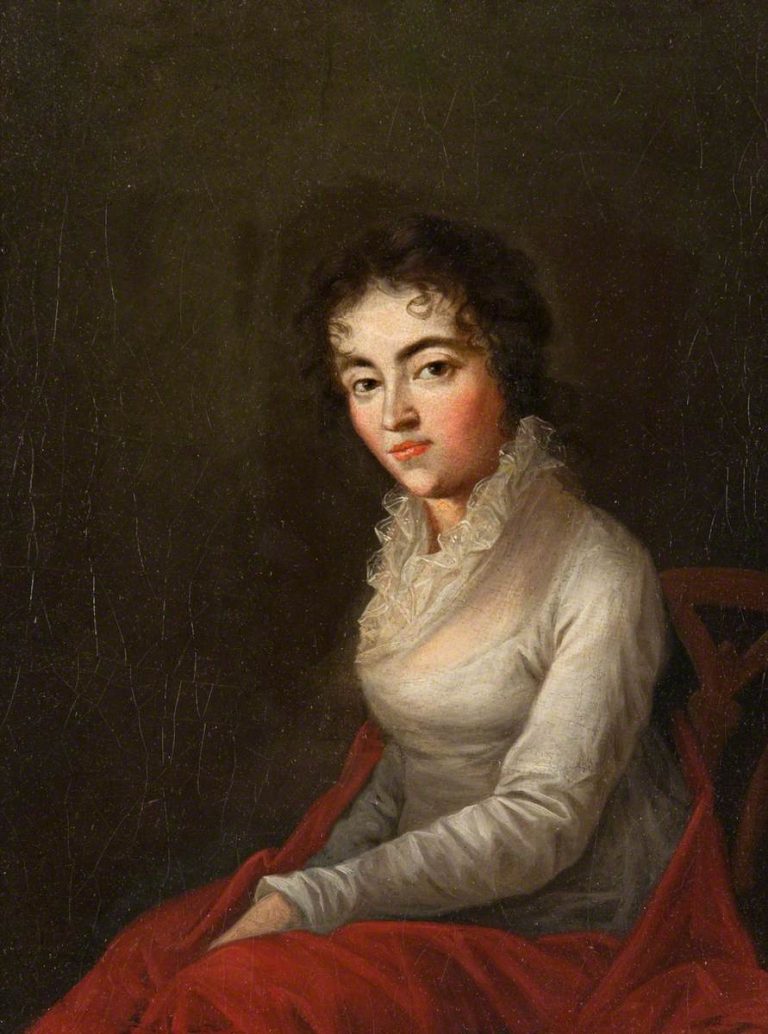
The point where the story becomes truly painful is another, and it dates to 1808. Constanze, a widow for seventeen years, went back to Sankt Marx to look for the exact spot where her husband had been laid. The gravedigger of 1791 had been dead for a long time. The graves of that year had been reopened and reused, as the regulation allowed, and the bones that surfaced had been reburied elsewhere. There was nothing left to find. The broken column with the sad angel that tourists photograph today is a nineteenth-century monument planted at a probable spot, not over a body. Of Mozart, materially, nothing remains anywhere.
So why did the legend win? Because it was needed. It was needed by the nineteenth century, which required misunderstood and sacrificed artists to justify its own idea of genius, and cut Mozart to that measure the way a suit is cut. It was needed by biographers, because a common grave under the snow tells better than an administrative procedure. It is still needed by us, who keep repeating that the great die poor because it is a convenient way of not asking ourselves how much we pay the living. Mozart was not poor in the sense we mean: in his last year he was earning well, he had commissions, he had a court appointment. He was full of debts, which is a different and more modern thing, and he died with a household to support and a job delivered half done.
What they took from him was not the dignity of his burial, it was the name on the stone. The 1784 decree had abolished individual headstones for reasons of hygiene and economy, and in doing so an enlightened emperor achieved, without intending it, the grimmest result of the century: he made it impossible to find one’s dead. Not only Mozart. Everyone. Thousands of Viennese ended up in graves that after ten years no longer existed, and with them went the possibility of visiting them. The genius, in this story, was not treated worse than the others. He was treated exactly like everyone else, and because he was Mozart we noticed what that meant.