

May 2023, Cesena. In the home of her teacher, Pia Zanca, overrun by flood mud, among shovels and rubber boots, the only score left on the piano is the Queen of the Night. Radmila Novozheeva opens it and sings, without a single warm-up exercise, in front of the people shovelling. That video travelled across the country, but her story begins much farther away, in Angarsk, near Lake Baikal: the daughter of deaf parents, as a child she would hold down a single key for minutes, listening to the sound being born and dying away. Then the piano, a diploma in Russia, studies in Bari, Modena and Cesena, where she now teaches operatic singing at the Istituto Corelli. This spring she was on Rai 1’s Saturday night with Dalla strada al palco, all the way to the final, where she sang Con te partirò alongside Vittorio Grigolo. On Sunday 15 November, at 8 pm, she will bring her signature aria to the Sala Santa Cecilia, at the Classical Rave Party.
You were born in Angarsk, near Lake Baikal, and studied piano before becoming a singer. What did the piano give you that you still find in your singing today?
The piano gave me discipline first of all, and then the ability to listen deeply to every sound I produced, with all of myself, with body and soul. At the piano I learned to enter the music not only as a performer but as a person, bringing to what I played my own experience, my emotions, my way of feeling. I think that sensitivity stayed with me when I started singing.
You have said you grew up with deaf parents. How much did that silence shape your relationship with sound and with the voice?
For me it was a wonderful time. Every note was something magical, as if I were stepping into another world. I could hold a key down for minutes and listen to how the sound began and how it ended. I think the silence mattered a great deal for my sensitivity and the way I approached music. It is above all from my inner world that, through the voice, I can tell everything I have lived.
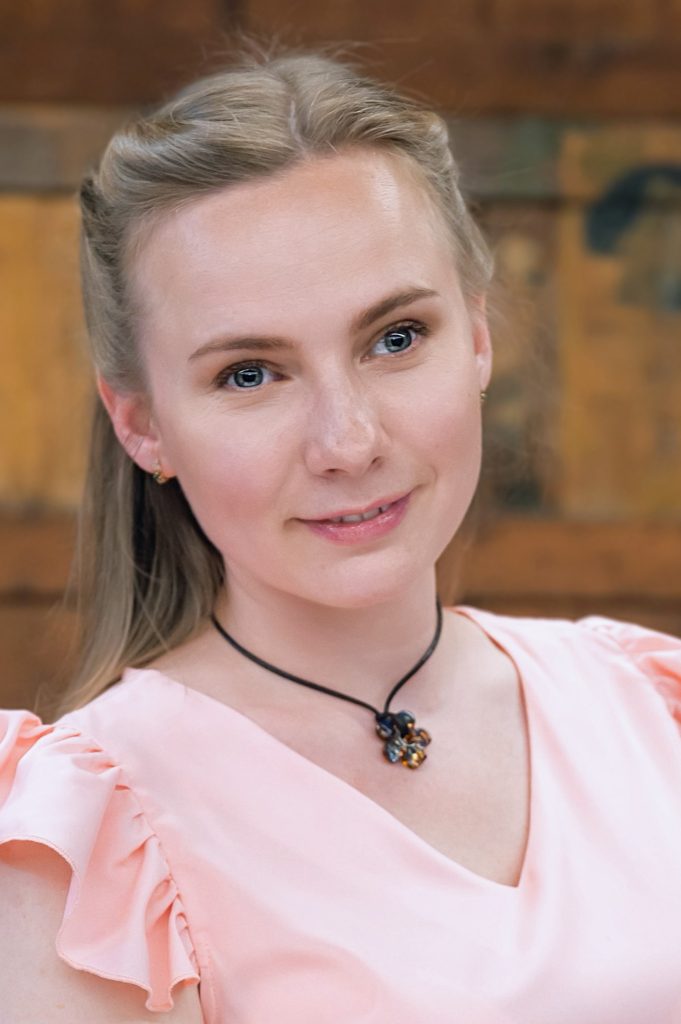
You took your diploma in Russia, then studied in Bari, Modena and Cesena. What differences did you find between the Russian and the Italian schools of singing?
The method is different, and so is the number of hours. In Russia I had a singing lesson four times a week; in Italy, unfortunately, once a week, forty-five minutes. Most of the time I had to study on my own, and go to a pianist when I needed one and had the chance. In Russia the teacher, in singing as in any other subject, treats you like a child of their own: they worry about you, they care about your path. In Italy the teachers, I’m speaking from my own experience, don’t follow you all that much, everything is your responsibility. In a way that matters too, and it’s good, because in the end you’re the one who has to care about your own study. And since from the beginning I had got used to counting only on myself, I didn’t have big problems.
In Russia the work is very much about expression, about the musical phrase, about technique. In Italy it is often about pronunciation, since we are foreigners, and about phrasing. All these years I have wanted to work on the Italian style too, because I love Italian music, bel canto, enormously.
May 2023, the flood in Romagna: shovelling mud out of your teacher’s house, you sang the Queen of the Night. Technically, what happens to a coloratura voice with no warm-up, in the cold, with boots in the mud?
For me that piece is a warhorse: I can sing it even without warming up, even though it is one of the hardest pages Mozart wrote. I’ve been singing it for twelve years, it has become part of me. Maybe it comes easily thanks to my vocal technique, and to the ease I have in the high notes and the very high notes. I don’t know anyone else who sings it without vocalises.
Why that aria, an aria of vengeance, at that moment?
Honestly, we didn’t even think about it. It was the only score sitting on the flooded piano at that moment. And it’s a famous piece, everybody knows it. We had no time to choose: it came naturally.
That video made you known first as a symbol and then as a singer. For a musician who wants to be judged on her voice, was it a burden or an opportunity?
Definitely not a burden. It was a wonderful opportunity, a showcase to make myself known to new people.
The Queen of the Night lives on high Fs, staccatos and lightning-fast scales. How do you study an aria like that, and how do you keep it in shape over the years?
As I said before, I have never had difficulty either with the very high notes or with the agility: they were given to me by God. At the beginning, though, I had to study the triplet scales and the arpeggios a great deal, at a slow tempo, listening to every note and working on intonation. Because the difficulty is not only in the high F, but in a passage that is clean and in tune.
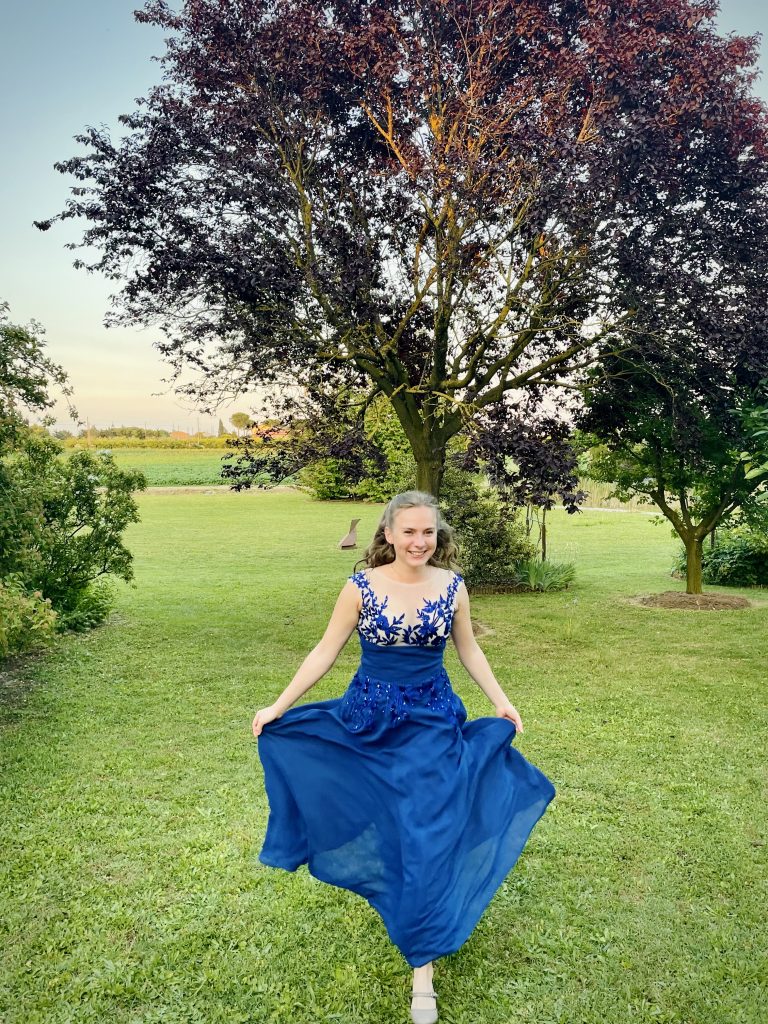
On Dalla strada al palco you sang opera on Saturday night on Rai 1, in front of millions of people who may never have set foot in an opera house. What did you learn?
I felt a huge joy at being able to speak to people’s souls through music. In that moment we were all united. I learned that music is eternal and has an immense power, and I am very happy to be part of this magical world.
In the final you sang Con te partirò with Vittorio Grigolo. Where does the boundary between opera and song lie for you, and how does your vocal production change when you cross it?
I didn’t feel any boundary. I sang that piece as if it were an aria with its recitative. The opening section, which was low for my voice, I tried to sing with my own technique, changing nothing, just sculpting the words and giving them more meaning. The rest I sang with my operatic technique, just as it is.
On 29 May you sang in Assisi, from the forecourt of the Basilica, in the live evening on Rai 1. Singing outdoors, with a microphone: what changes compared with a hall?
It was a beautiful experience, one I will carry in my heart. I quite often sing outdoors with a microphone, especially in summer. But singing live, and closing the evening, was very beautiful and at the same time a great responsibility.
The difference is also in the acoustics. In a hall the sound gathers and comes back to you; outdoors it vanishes, it disperses, and there is no return.
You teach operatic singing at the Istituto Corelli in Cesena. What do you ask a student first when they walk into the classroom?
What music is to you. What you want to tell with your voice. I always tell my students that they have to work with their soul, and not just sing the notes, which on their own interest no one. They have to sing as if they were painting a picture, without thinking about technique. When you understand what you are singing, and you sing it with your heart, the technique comes by itself.
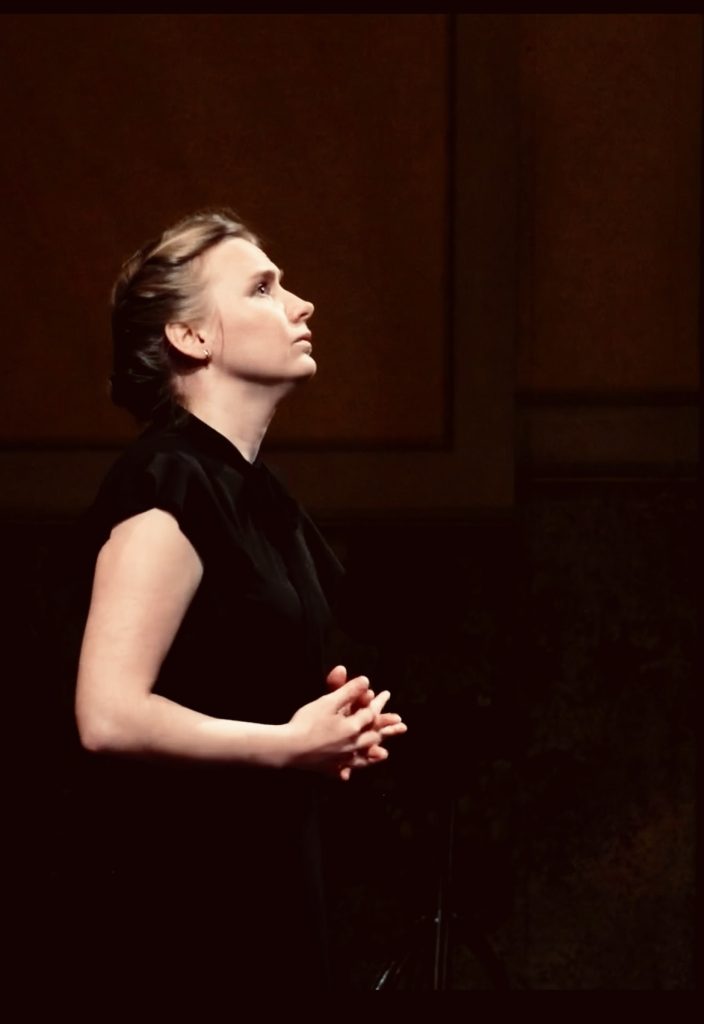
A singer carries the instrument inside the body. How do you protect it every day, and what have you learned about physical fatigue?
I try not to catch cold and not to strain my voice: I don’t sing more than an hour a day. It wasn’t always like that, at the conservatory I sang three hours straight every day and came out with no voice. Now I’ve learned that the voice too, the vocal cords too, need rest. I do far fewer technical exercises, but I do them anyway, to stay in shape. And then, as soon as I start singing I feel so good, so happy, that sometimes I can’t stop and I don’t look at the clock. Walking and swimming are also very good for the breath and for the whole body. Our body is our sound box, and our protection.
You completed a two-year course in chamber music. Which chamber repertoire, Russian or Italian, do you feel is most your own, and why?
Yes, I graduated in chamber music at the Cesena Conservatory. For my graduation I brought a Rossini cycle and Rachmaninoff’s Vocalise. I like almost all chamber music, German, French, Italian. But more than any other I feel the Russian is mine, Tchaikovsky and Rachmaninoff, because it reflects my Russian soul, deep and at the same time limpid. It is my culture, it is my roots.
What will you sing on 15 November? And what do you expect from a concert hall turned into a rave, with an audience that may know you from television?
I’ll sing my favourite piece, Mozart’s Queen of the Night. It is an honour to sing in this beautiful hall and to work with great musicians and great artists, in a setting that is new to me. It will be an unforgettable experience, I am sure of it. And I’ll be happy to sing again for the whole audience, even for those who already know me.
Is there anything you want to say that we haven’t asked?
I would like to thank Maestro Enrico Melozzi for the invitation, for this wonderful chance to perform on a prestigious stage next to great artists. And for this interview, which was so interesting.