

by Luisa De Vita
Today we turn to Consuelo, the heroine of the novel of the same name by George Sand, the pen name of Amantine Aurore Lucile Dupin: a writer who made herself heard as a solo voice in a European literary landscape dominated almost entirely by men. For the novel’s Consuelo to be believable, she needed a real model: a singer of flesh and blood who had actually gone through the sacrifices that lead to success. Much of the outward detail, and many of the behaviours, professional and human, of the gypsy Consuelo come from the life of Pauline Viardot.
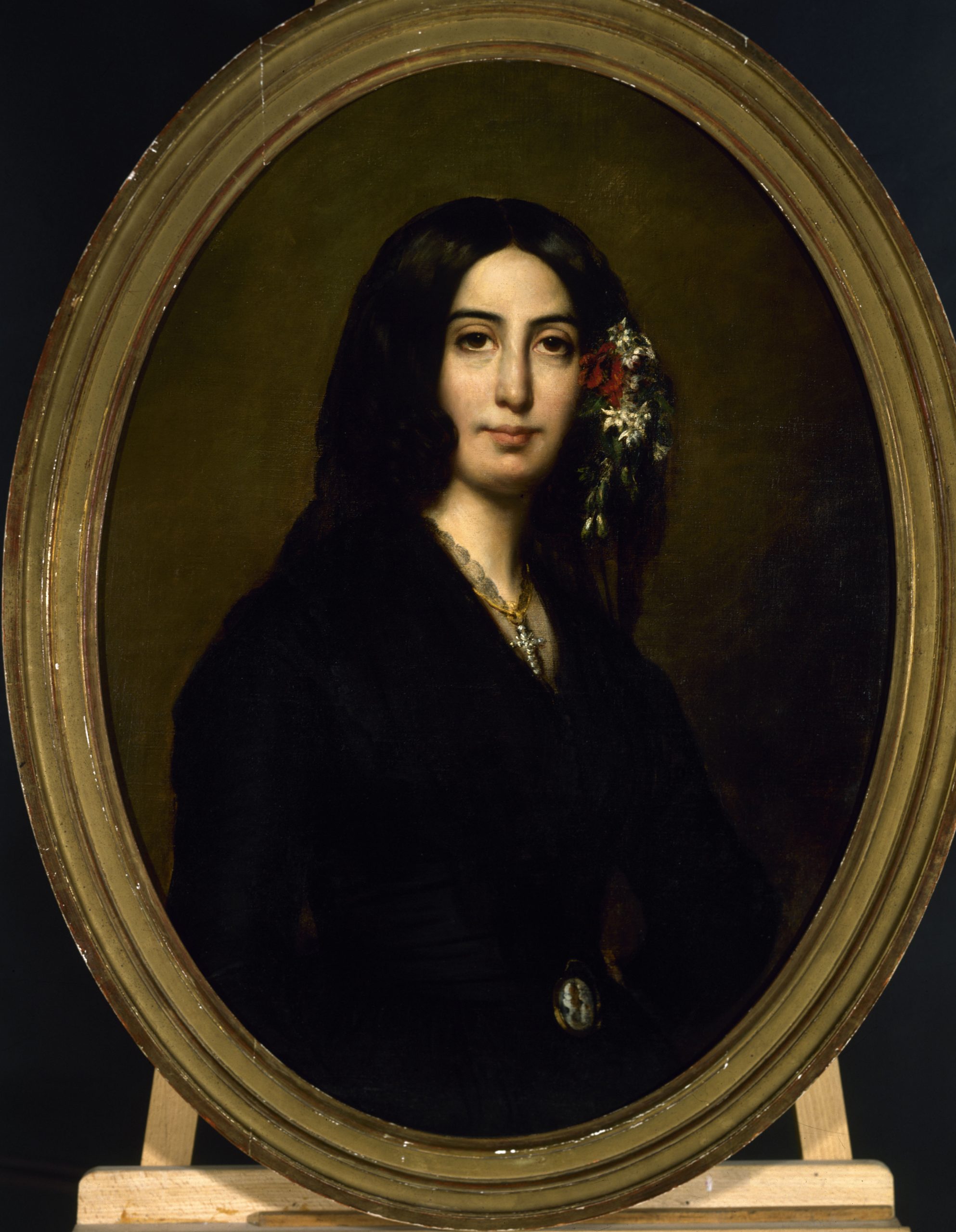
Like any artist who uses friends as models for her creations, George Sand must have talked at length with Pauline to research her life. And she must have found out that Pauline came from a line of singers: her father, Manuel García, was one of the brightest names in the Rossinian firmament. Sand studied her friend and, like Wilde’s mirror, absorbed her character and gestures to pour them into Consuelo. Pauline was certainly aware of this appropriation of her personality, and was delighted by it.
The novel, published between 1842 and 1843, tells the story of a poor, immensely gifted young singer, raised in Venice and discovered by the maestro Porpora. Disappointed by her fiancé Anzoleto, Consuelo leaves for Bohemia to work as a singing teacher for a noble family. There Count Albert falls in love with her and asks her to marry him; but the young woman, torn between love and the desire for independence and a career, sets out on an adventurous journey to Vienna with the young Haydn, to seek the advice of her teacher. Sand herself, while acknowledging several flaws in the novel, found it interesting because it captures the spirit of the eighteenth century: the age of Maria Theresa, Frederick II of Prussia, Voltaire and Cagliostro, a century full of contrasts between art, philosophy, mystery and great revolutions.
The novel immediately caught the interest of musicians. Meyerbeer confided to Pauline Viardot that he wanted to make an opera of it, but the project never took shape. Franz Liszt, too, thought of a Consuelo: the Revue et Gazette musicale of Paris bears witness, announcing his intention to set part of the novel to music and speaking explicitly of characters and performers. Of the project, however, no trace remains in the correspondence between Liszt and Sand, and Pauline Viardot, the only singer ready to take on Consuelo’s features, is never named there.
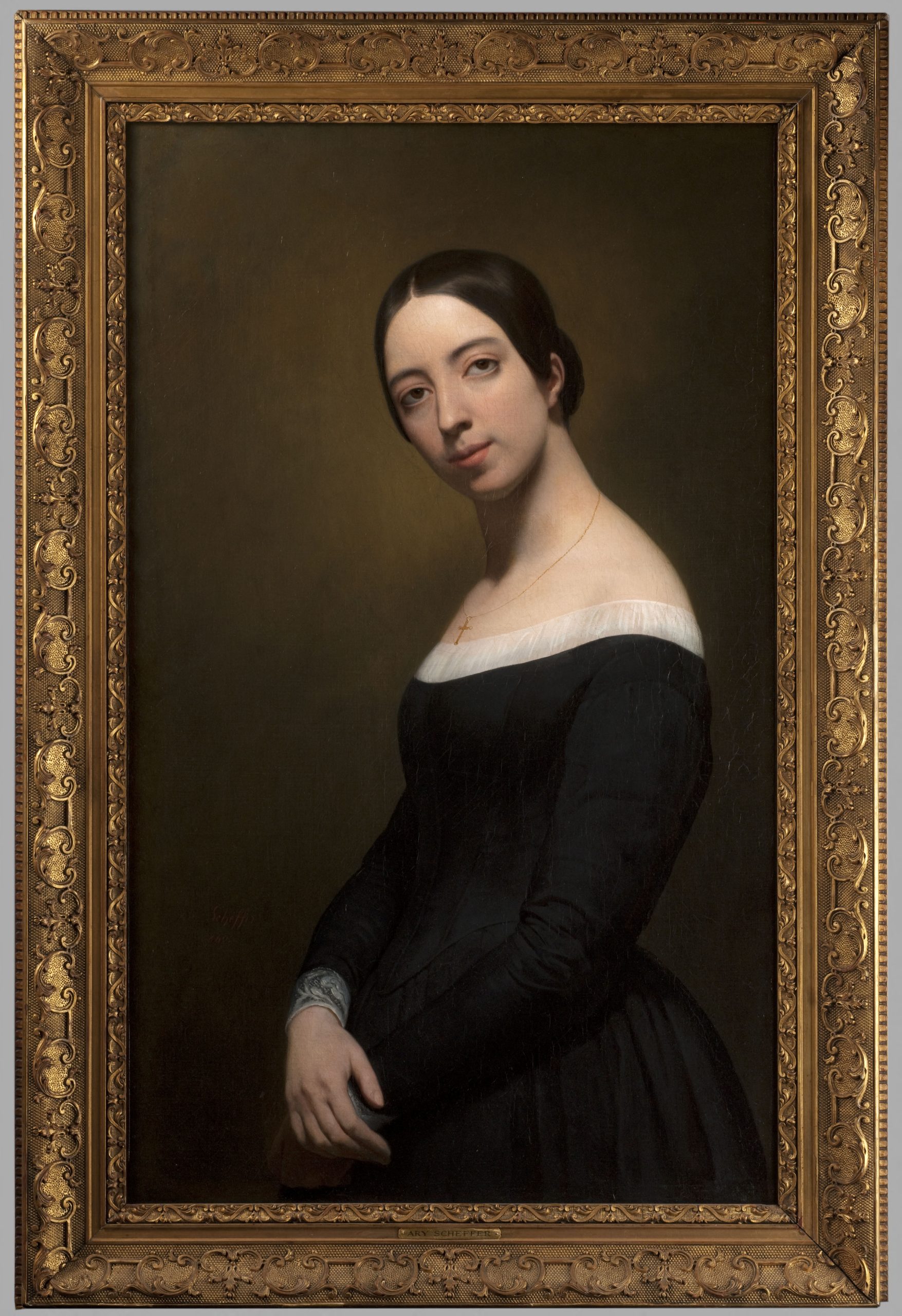
For an entirely Italian Consuelo we have to wait until the end of the century, with Giacomo Orefice’s three-act commedia lirica of the same name, whose score won the Baruzzi competition announced in 1894 by the Municipality of Bologna. Orefice’s music is still held in family archives and is effectively inaccessible, so it cannot be judged. It is easier to reason about Alfonso Rendano’s version of 1902, in a prologue and three acts, to a libretto by Francesco Cimmino.
The opera keeps some resemblances to the novel: the prologue, the three acts and the tableaux within them follow a structure close to Sand’s. But the compression the stage demands creates difficulties for the musical adaptation, and that is part of why the opera was heavily criticised, above all by the German reviewers of the Frankfurter Zeitung. This is not the place for a systematic comparison between novel and libretto; one may suppose that many differences stem from the librettist’s choices in reading the author’s writing. Opera, after all, is a highly conventional genre, and its audience, historically conservative, has often resisted the most radical innovations: the result is a constant tension between the wish for renewal and fidelity to tradition. Cimmino’s work deserves to be taken seriously all the same: his language was judged archaic, but it retains a fair measure of narrative and dramatic force.
One question remains, and it concerns the whole of opera. Why does it kill its heroines? Why do women on stage almost always end up dying? It is not merely a taste for tragedy or a narrative device. In opera, a woman’s death is often a structural necessity: the point where the story closes, the moment when the emotion is fulfilled, but also the passage that “restores order”. Heroines can rarely simply walk away. Their freedom, even when only hinted at, seems unable to stay open. On them the guilt, the desire, the redemption of others are played out; and yet inside this cruel mechanism something powerful remains, because they sing to the last instant. Those voices do not vanish, and they leave us with a question: who might that woman have been, if the story had allowed her to live?
To try to answer, I return to Consuelo. At the end of the novel, before Albert’s death, the marriage between him and Consuelo is celebrated, as Count Christian wished despite the religious and canonical obstacles. Immediately after the ceremony Albert dies in the arms of his family. The novel closes on Consuelo facing grief with dignity and spiritual maturity: the title of countess matters little to her, next to the feelings and moral depth that guide her. In the opera too Consuelo embodies a new model of womanhood for the nineteenth century: free, independent, driven by a deep moral and artistic tension. An archetype of emancipation and awareness, for whom the title of Countess of Rudolstadt is merely a social ornament, because her heart and mind have been able to live without following rules set by others. Consuelo, unlike her sisters of the stage, does not die.
Bibliography
F. Battaglia, Alfonso Rendano e il suo sogno teatrale, introductory essay to the edition of the libretto, Bongiovanni, Bologna 2004.
S. Ragni, I viaggiatori musicali nell’Italia del Settecento, vol. IV: Consuelo di George Sand, Guerra Edizioni, Perugia 2019, pp. 95-113.
M.P. Rambeau, La femme musicienne: représentations et enjeux dans l’œuvre de George Sand, CNRS Éditions, 16, 2016, pp. 56-73.
G. Sand, Consuelo, UTET, Torino 1947 (2 vols.).
G. Sand, Storia della mia vita, edited by Marina Piazza and Paola Forti, La Tartaruga, Milano 1994.