

On 1 May 1761, in Vienna, a twenty-nine-year-old man signs fourteen clauses and with them hands himself over for thirty years. The document is the contract between Prince Paul Anton Esterházy and Joseph Haydn, hired as Vice-Kapellmeister. The text exists, has been published in full, and is the most instructive thing you can read to understand what a composer’s trade was in the eighteenth century.
The first thing the contract establishes is not about music, it is about clothing. Haydn and the musicians under him must appear in uniform, clean, with white stockings, white linen, powder, and either the pigtail or the hair bag, as they choose. The uniform is not a costume detail: it means you are staff, that whoever enters the hall sees from afar which category you belong to, and that you do not belong to the category of the guests.
The second clause concerns conduct. Haydn must behave in an exemplary way, refrain from excessive familiarity and from coarseness in eating and drinking, and not appear dejected but in good spirits. Towards the musicians he directs, the text is surprisingly civil: he must treat them not as a master but with gentleness and indulgence, with modesty and calm, and when someone errs he must correct him in private before reporting upward.
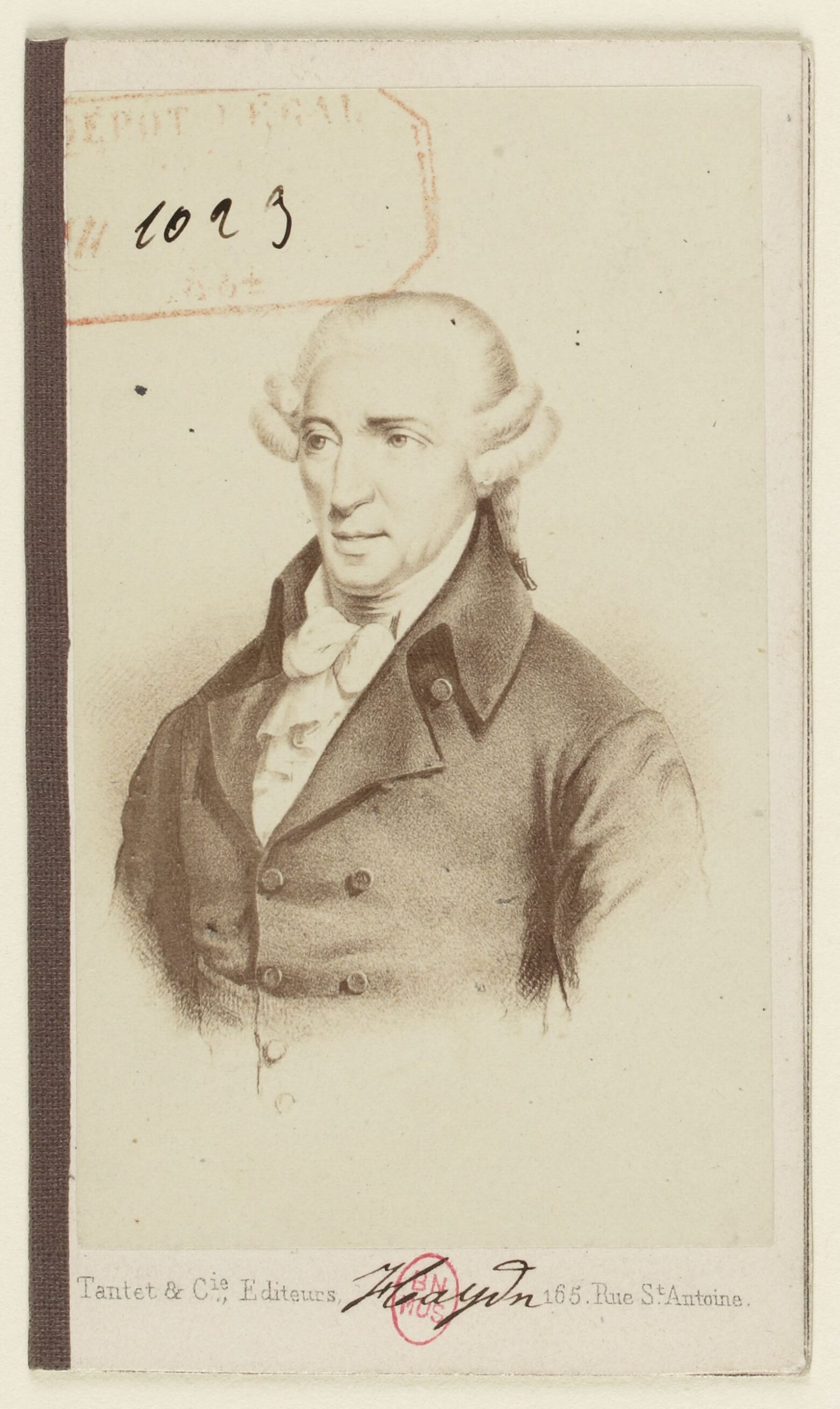
Then comes the clause that today is read with a certain chill. Haydn composes the music that His Highness commands. That music he may not communicate to anyone else, may not have copied, and keeps for the exclusive use of the prince. He may not compose for others without knowledge and permission. In one line: what he writes is not his. It is the exact equivalent of a modern clause on the employer’s intellectual property, written a hundred and seventy years before anyone invented the formula.
Next comes the obligation of attendance. Every day, before and after noon, Haydn presents himself in the antechamber, in uniform, and asks whether His Highness wishes music to be made. Having received the order, he passes it on to the others. Twice a day, for years, a man who was writing the quartets that would found a genre stood in line in front of a door waiting to learn whether that afternoon he was needed.
Then there are the practical duties, which no romantic biography tells. Haydn answers for the instruments and their upkeep. He trains the female singers, so that the women’s voices of the household do not pick up in the country the bad habits heard in the city. He keeps the archive. In substance he is the conductor, the voice teacher, the librarian and the storekeeper.
The pay: four hundred florins a year, paid quarterly. In addition, meals at the table of the household officers, or half a florin a day if he prefers to fend for himself. The contract runs for three years, with a year’s notice, and Haydn promises not to look for other employment in the meantime. Above him remains Gregor Joseph Werner, the old Kapellmeister, who keeps authority over the church music: Haydn is number two and when it comes to the choir he does not get a look-in.
Was four hundred florins a lot or a little? In the Vienna of the same decade, a good orchestra player earned between three and five hundred, a court physician far more, a personal valet around two hundred. Haydn therefore enters the upper band of the staff, with board paid and lodging at Eisenstadt. It is not misery, it is dependence.
What follows is a lesson in how careers work in spite of contracts. Paul Anton dies on 18 March 1762, less than a year after the signing. He is succeeded by his brother Nikolaus, who understands music and wants it every day, and who has built for himself in the middle of a Hungarian marsh a residence, Eszterháza, with an opera house and a marionette theatre. Werner, who watches that youngster take over the house, writes to the prince in 1765 a letter of protest complaining about the disorder of the archive and the neglect of the instruments. The prince answers with a regulation and with the order to Haydn to compose more. Werner dies on 3 March 1766, and Haydn becomes Kapellmeister in every respect.
The clause on the ownership of the works frays over the years. In the renewed contract of 1779 the ban on composing for others disappears, and Haydn begins to sell to the publishers of Vienna, Paris and London the same music he wrote for the house. In 1790 Nikolaus dies, his successor Anton dissolves the orchestra, and Haydn leaves for London with a contract from Johann Peter Salomon that earns him, in a single season, more than he had made in ten years of service.
Haydn died in Vienna on 31 May 1809, with the city occupied by Napoleon’s troops. He was seventy-seven and owned a house in the suburb of Gumpendorf, bought with the London money. In the inventory of his possessions there is also the parrot, valued separately.