

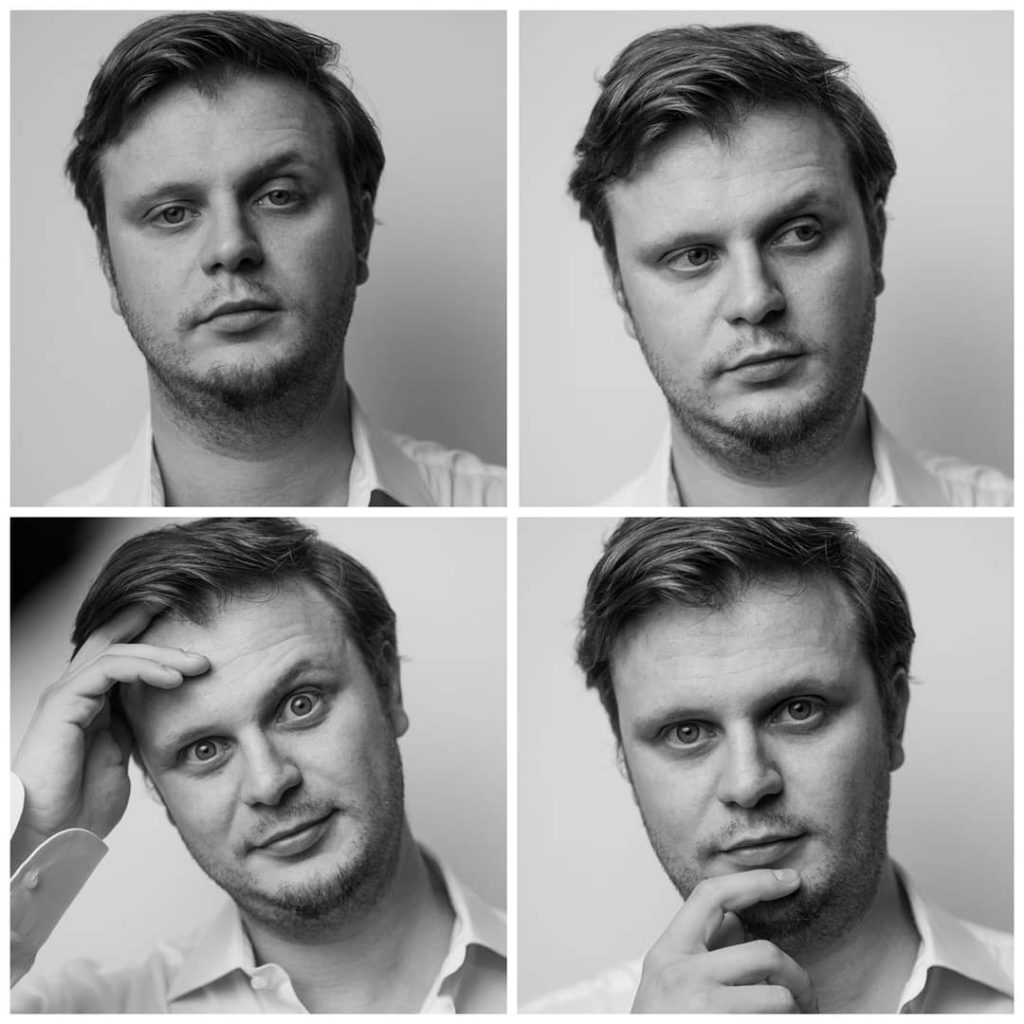
At five, with a pillow for a belly, he sang Nessun dorma in imitation of Pavarotti. At ten he was taking on Ulrica from Un ballo in maschera. Then high school, enrolment in Chemistry, the first professional choirs and the discovery of the job he really wanted: voice lessons from the age of eighteen, the conservatory at twenty-four. Eugenio Maria Degiacomi, a bass-baritone from Parma, came through the Pavarotti-Freni Academy in Modena and the Rodolfo Celletti Belcanto Academy in Martina Franca, has made the buffo repertoire his home, from Leporello to Dulcamara, and since 2018 has conducted the Coro Ars Canto G. Verdi. In Enrico Melozzi’s Piccolo Principe he is the Businessman who counts the stars. He holds that making people laugh is far harder than making them cry, and he has little patience for those who decide for the rest of us who is good and who is not. On Sunday 15 November, at 8 pm, he will be in the Sala Santa Cecilia for The Classical Rave Party, with the finale of Don Giovanni.
You started studying singing at eighteen, late compared with someone who plays an instrument. What came before, and when did you realise your voice was an instrument?
Every singer will tell you they have always sung, from the time they were tiny. And it’s true: anyone with even a little vocal ability enjoys feeling every syllable slot into the right note. I decided late to begin structured study, but I have always sung. At five I imitated Pavarotti with a pillow under my belly, singing Nessun dorma; at ten I imitated Ulrica from Un ballo in maschera; at seventeen I joined a choir. At eighteen I decided to give my voice some structure with more serious study, which went on until twenty-four, when I entered the conservatory. Before the musical one, my education was scientific: after high school I enrolled in Chemistry, but meanwhile I was picking up bits of work in a few more professional choirs. That’s where I understood which job I really wanted to do.
You come from Parma, the city of the Regio, the Verdi Festival and a gallery famous for its severity. What does it mean to sing in front of the most demanding home crowd in Italy?
The truth is that times change, and so do people. Parma is a city with bigger contradictions and idiosyncrasies than people think: it fawns over those who are already famous and is afraid of discovering anyone. And discovery brings mistakes and missteps, which in Parma are unacceptable. People in Parma want to know that theirs is the winning team, that they aren’t backing the wrong horse. It’s true that artists of world calibre, Serie A, have come out of this city, but I doubt the credit goes to the city’s love of music. I think rather that Parma forces you to give your best: the alternative is to go under and change career. That said, I adore singing in Parma. The theatre is exceptional, the people who work there are lovely, and that environment gives me such a sense of calm that I can face everything with a fair amount of serenity and joy.
Leporello, Dulcamara, Don Pasquale: the buffo is your home. What does it take to make people laugh in music without becoming a caricature?
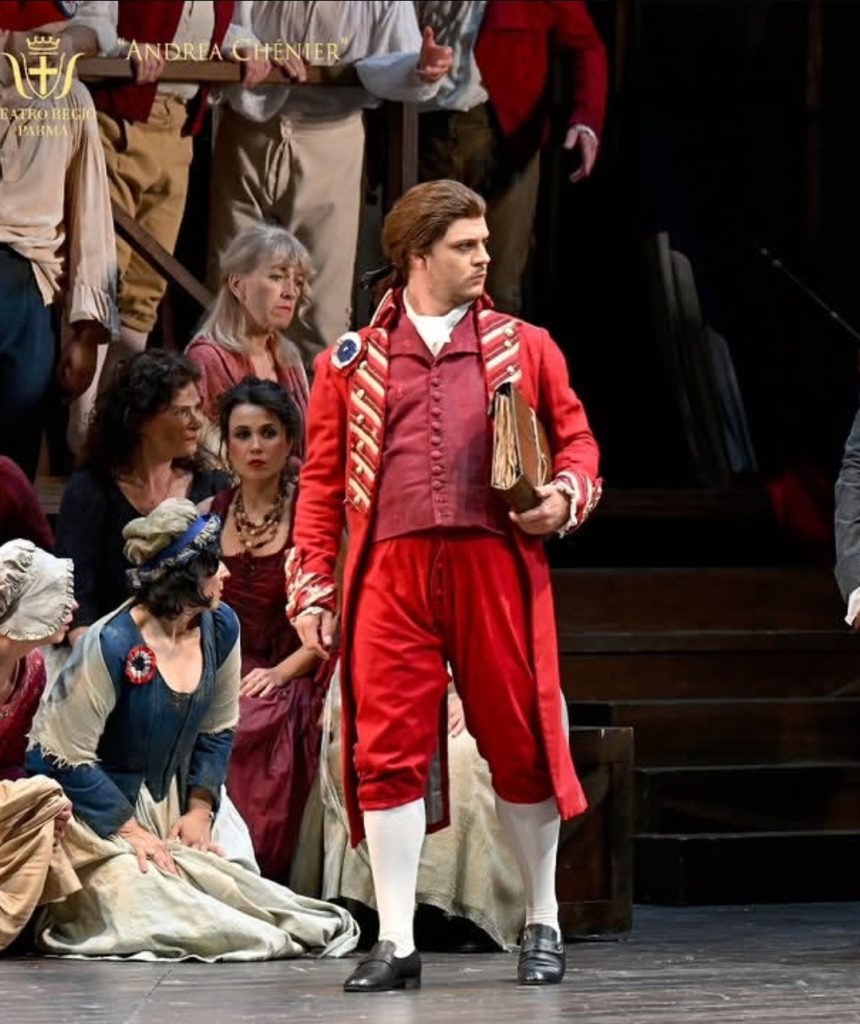
Let’s start from a premise: making people laugh is much harder than making them cry. A buffo role is buffo because of the situation the dramaturgy builds around it, more than in itself. By now the way of studying a buffo role is about as far from caricature as it gets, though the real skill lies in sensing the audience and taking them where you want them. I don’t think there’s any other rule: serious or comic, a role has to be approached with enough empathy to bring whoever is listening in the direction you want. And then, no less important, you have to take pleasure in giving pleasure. If that’s missing, or if you sing for yourselves, change repertoire.
The buffo of Rossini and Donizetti lives on lightning-fast patter. How do you train the tongue, the breath and the body to sustain that speed without losing the legato?
You repeat. I don’t think there’s any other way. It’s also true that of ten singers you hear in a patter role, all ten approach it in completely different ways. Even interpretation is taught in ways that are often opposed and contradictory: nobody has the real solution to the role, neither technically nor interpretively. Especially in the buffo, falling into the obligatory conventions of tradition kills the artist’s flair, which might instead have the stroke of genius and find a reading funnier than anything done so far.
You came through the Pavarotti-Freni Academy in Modena and the Rodolfo Celletti Belcanto Academy in Martina Franca. What does a belcanto school teach that the conservatory doesn’t?
If the academies teach you the trade, the conservatory teaches you how to face the world of singing and, more generally, of music. Practical skills aside, which I won’t dwell on, you enter an academy when you already know the game. The academy can give you the role at the festival or in the season, it does networking and it should, finally, bring you into the working world and develop you as an artist. Should. Often, instead, it keeps the supporting-role circuit running at rock-bottom cost, but we all know how it works. The conservatory, for its part, does a first sifting for that world. Do you like scraping the bottom of the barrel with your fingernails and teeth? Perfect, you’re ready for the job of opera singer. Do you want to be constantly judged and questioned, as if every mistake could compromise everything? Then the theatre is the place for you.
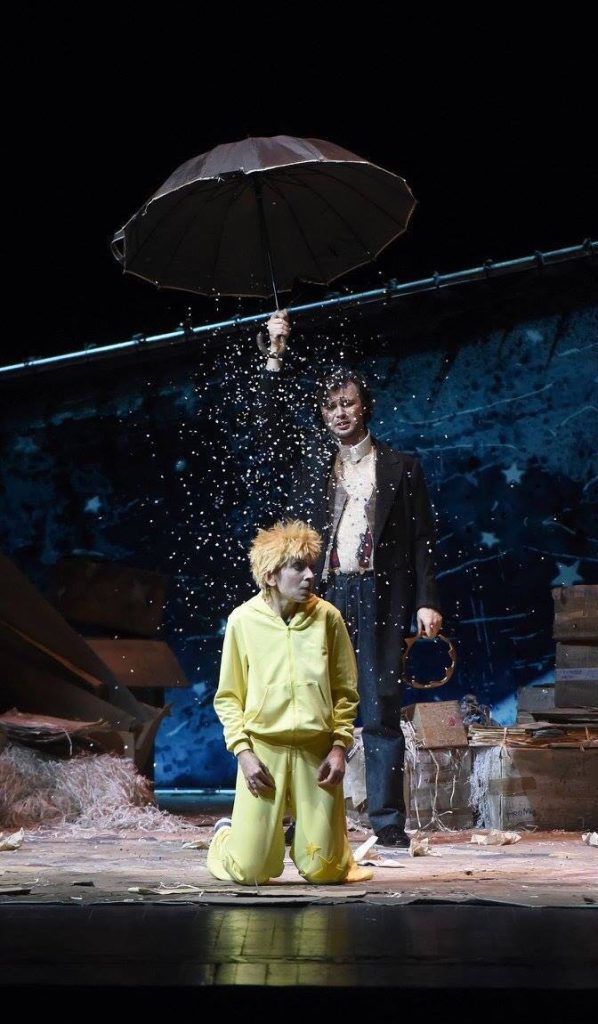
In Enrico’s Piccolo Principe you are the Businessman, the one who counts the stars and believes he owns them. How do you build, in music, a character halfway between satire and fable?
You have to be able to put yourself in the audience’s shoes. What do I expect from someone who is supposed to make me dream? How much does the artist have to believe in it for me, the audience, to hang on his every word? In short, I think a large part of the work is done on the conviction with which you say certain things, and in the end you really are convinced you own the stars. After all, who can say otherwise? Ah, how lovely it is to be able to play with conviction to this degree. Then theatre stops being theatre and becomes a cross-section of every artist’s unconscious.
Il Piccolo Principe also speaks to children and families. What does an audience that doesn’t know the conventions of opera ask for, compared with the one at the Verdi Festival?
Dangerous question. Can I answer with great irony and say that between an inexperienced audience and an audience of opera buffs there’s practically no difference? Don’t make me elaborate, please.
The second part, with Britten, the children’s choir, what today’s opera is missing and the Don Giovanni finale he will bring to Rome on 15 November, comes out on Friday 2 October.