

Paris, Saturday 15 May 1920, Théâtre National de l’Opéra. Ernest Ansermet raises his baton, a curtain designed by Pablo Picasso opens, Massine’s dancers step onstage, and Diaghilev’s Ballets Russes put into circulation one of the pieces that would change the music of the twentieth century. The house programme reads: music by Giovanni Battista Pergolesi, arranged by Igor Stravinsky. Of what is heard that evening, most is not by Pergolesi. Stravinsky does not know it, Diaghilev does not know it, nobody in the hall knows it, and it will take fifty years of archival work before anyone proves it.
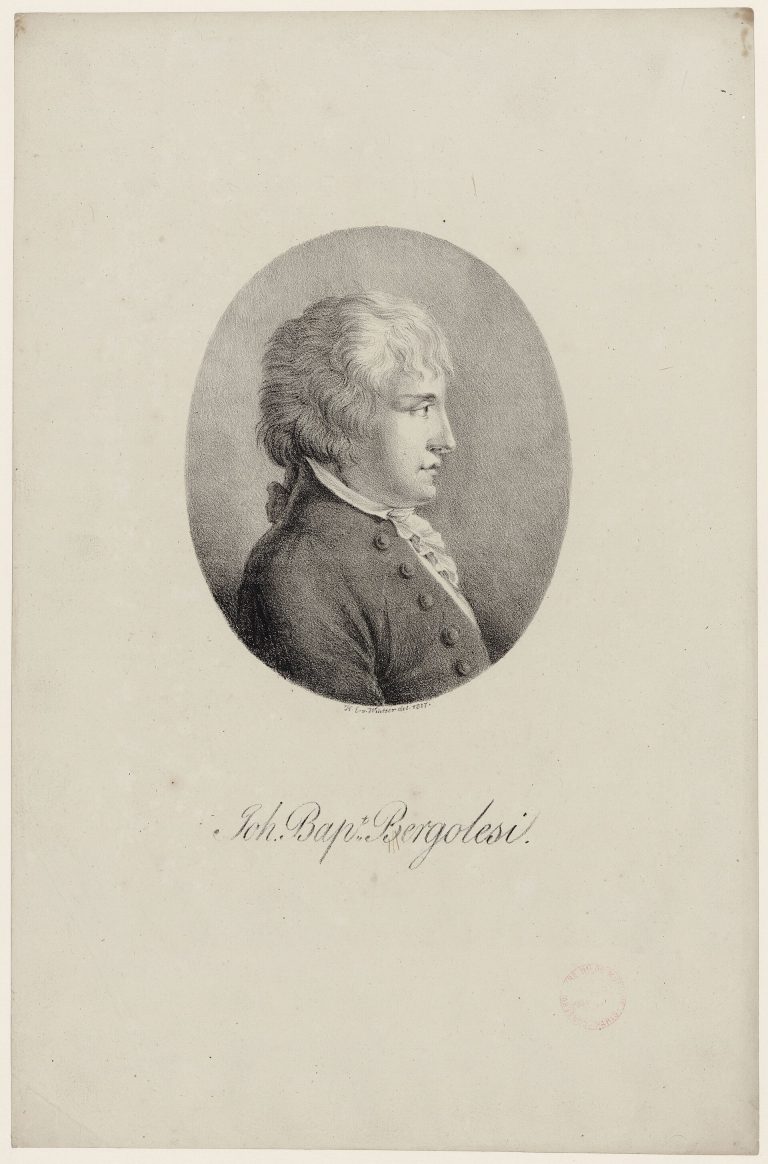
To understand how we arrive at that evening we have to start from a boy who dies at twenty-six. Giovanni Battista Pergolesi was born at Jesi on 4 January 1710 and died at Pozzuoli on 16 or 17 March 1736; the Centro Studi Pergolesi of the University of Milan gives the 17th. In the death record the cause is written in textbook Latin of the period, tabe etica, meaning consumption. He spent his last months as a guest of the friars at Pozzuoli. They buried him in a common grave near the cathedral.
In those last weeks he wrote the Stabat Mater. It had been commissioned by the Neapolitan confraternity of the Cavalieri della Vergine dei Dolori di San Luigi di Palazzo, which wanted to replace Alessandro Scarlatti’s Stabat of 1724, by now felt to be old-fashioned, for the Good Friday meditation. The fee that circulates is ten ducats, and it should be said that the figure comes from biographical tradition and not from an account book, along with the line attributed to him: I was paid ten ducats although it is not worth ten baiocchi. First printed edition: London, 1749. From then on the piece becomes the single most reprinted composition of the entire eighteenth century. Johann Sebastian Bach made a sacred parody of it, Tilge, Höchster, meine Sünden, BWV 1083.
And this is where the mechanism begins. A composer who dies at twenty-six with a European reputation becomes, for a publisher, the closest thing to a brand. Around 1940 the compositions attributed to Pergolesi numbered about three hundred and thirty. Today, counting Barry S. Brook’s tabulations, those recognized as authentic are about thirty. Ninety-one per cent of the attributions are considered spurious. It is not a cataloguing error, it is a market: Pergolesi’s name sold, the names of the real authors did not, and copyists wrote at the top of the sheet whatever suited.
Let’s go back, to London in the mid-1750s. A publisher prints a collection of trio sonatas and puts Pergolesi on the cover. They were written by Domenico Gallo, a Venetian about whom very little is still known today. Half of Gallo’s surviving music circulated for two centuries under someone else’s name.
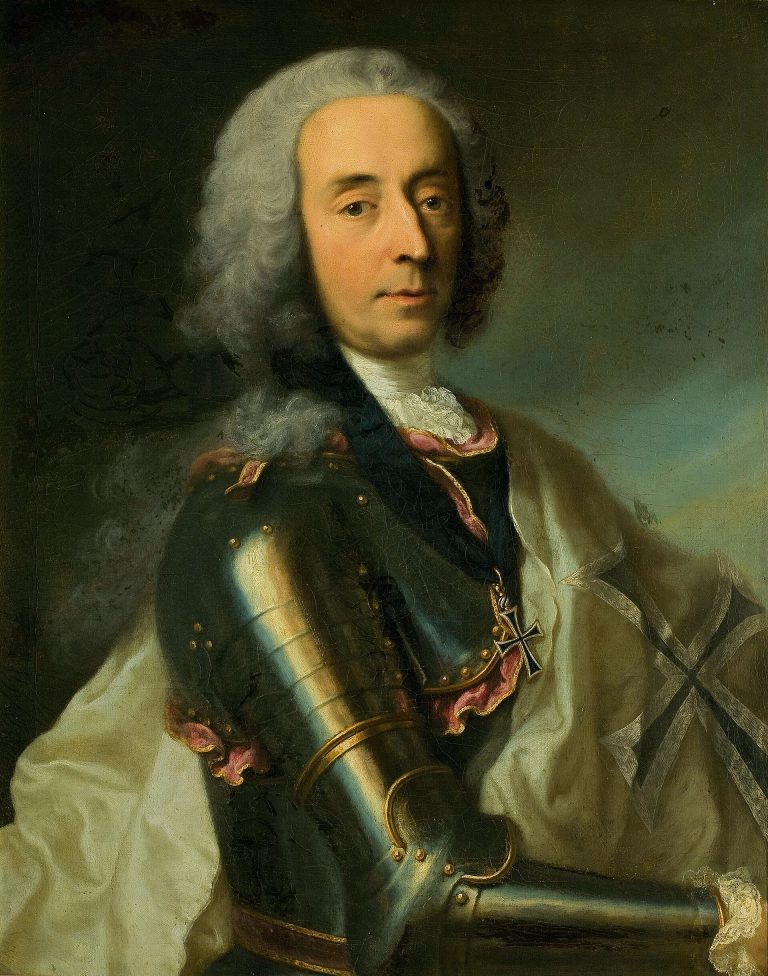
Another jump, to The Hague, 1740. Six Concerti armonici appear without an author’s name, edited by Carlo Ricciotti. Fifteen years later London reprints them attributing them to Ricciotti. Then someone begins to say they are by Pergolesi, and for two centuries they remain his. In 1979 Albert Dunning opens the archive of Twickel Castle and finds a manuscript score of those six concertos with an autograph preface: Partition de mes concerts gravez par le Sr. Ricciotti. The signature is that of Unico Wilhelm van Wassenaer, a Dutch diplomat and nobleman, who in the same preface judges his own concertos some passable, some mediocre, some very bad. He had written one of the masterpieces of the century and did not know it.
Last jump before the return to Paris: Milan, 1885, the house of Ricordi. Alessandro Parisotti publishes the Arie antiche, three volumes of seventeenth- and eighteenth-century rediscoveries for voice and piano, and inside he puts some of his own, passing it off as old. One of those is Se tu m’ami, attributed to Pergolesi. No eighteenth-century manuscript of that melody has ever been found, for the simple reason that it does not exist. In 1949 Frank Walker put the matter in black and white in Music & Letters with a title that says it all, two centuries of Pergolesi forgeries and misattributions.
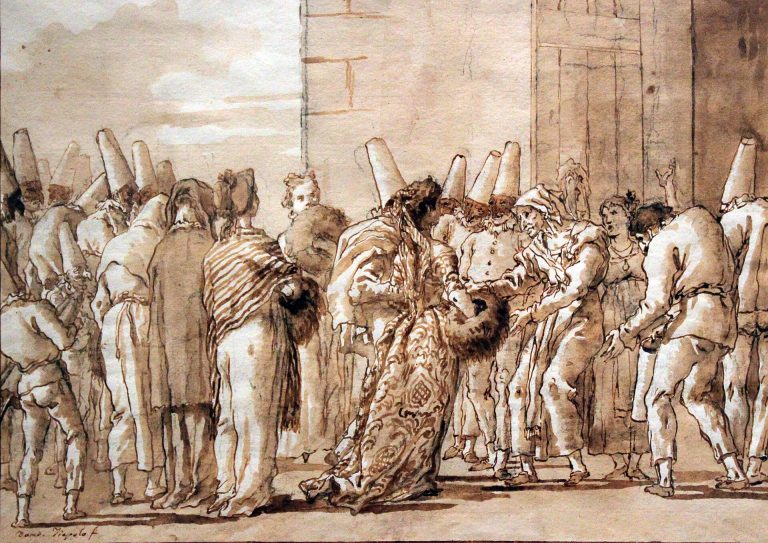
Now back to 15 May 1920, looking at the house programme with today’s eyes. The opening Sinfonia, the Scherzino, the Andantino, the Allegro assai, the Allegro alla breve and the Finale come from Domenico Gallo’s trio sonatas. The Toccata and the Gavotta with two variations come from harpsichord suites now attributed to Carlo Ignazio Monza. The central Andantino is Se tu m’ami, that is Parisotti, that is 1885. The Tarantella comes from a concertino printed under Pergolesi’s name that scholars assign to Fortunato Chelleri or to Wassenaer, and on this the disagreement is still open. Of Pergolesi, in Pulcinella, there are the arias taken from Flaminio, from Lo frate ‘nnamorato, from Adriano in Siria, and the Vivo for cello and bass. Not much, amid everything else.
The reattributions all come later. Walker in 1949, Helmut Hucke in 1969 with his study of the musical sources of Pulcinella, Dunning in 1980 with Wassenaer’s preface in hand. Stravinsky, when asked where that music came from, stayed vague, and the Scottish Chamber Orchestra has preserved the line with which he dismissed the question: numerous fragments, unfinished or barely sketched works that fortunately had escaped the academic arrangers. No statement of his on the discovery of the forgeries is on record.
To the purists who cried sacrilege, in Chronicles of My Life, in 1935, he had already answered once and for all: love diminishes respect, respect alone remains arid and can never serve as a productive or creative factor. And in 1962, with Robert Craft, he closed the account: Pulcinella was my discovery of the past, the epiphany through which all my later work became possible.
He was right, and for one reason more than he knew. What he put back into circulation was not the museum of a great dead man, it was the anonymous work of an obscure Venetian, of a Dutch nobleman who was ashamed of his own concertos, of a Milanese whose name we know and nothing more, and of a nineteenth-century Ricordi clerk. The past that Stravinsky discovered was made of people whom nobody had ever let sign.
Pergolesi remains where they put him in March 1736, in a common grave at Pozzuoli. Of the three hundred and thirty compositions that have borne his name, about thirty are his.