

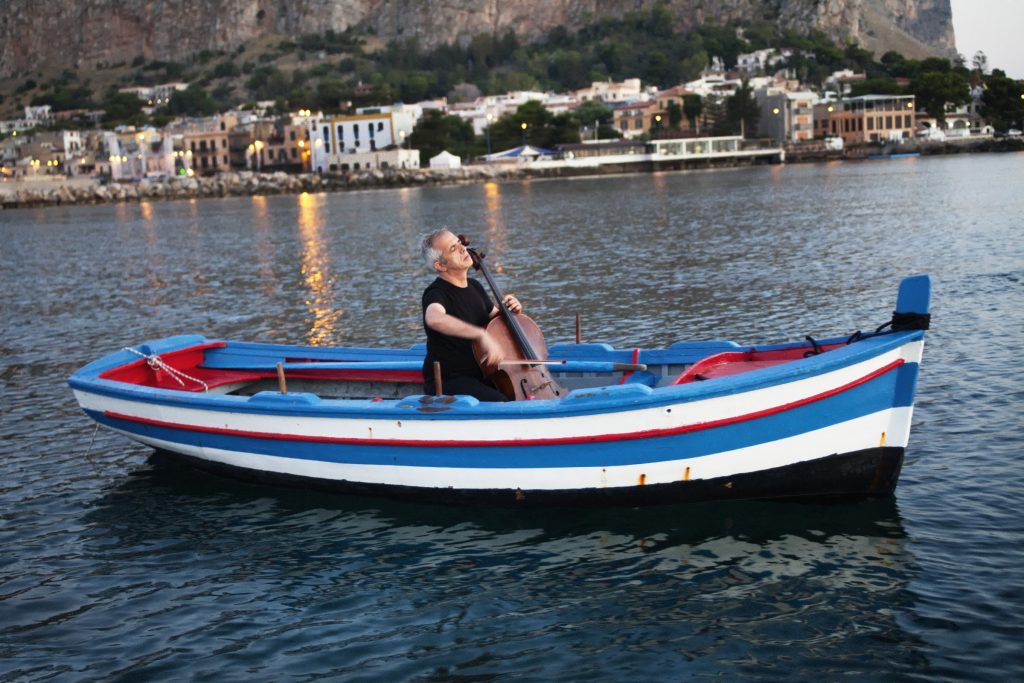
The cello, he says, can do anything: sing, weep, laugh, scream. And then, above all, speak. Giovanni Sollima, born in Palermo in 1962, has taken it into the Sahara, underwater and inside a block of ice, which under the weight of four strings doesn’t melt: it explodes. He plays a Ruggieri made in Cremona in 1679 and sees it as a boat travelling through time and space. He learned the trade at home, from his father Eliodoro, a composer: first the rules, then the freedom to be rid of them. In March 2012, at the occupied Teatro Valle, he called together the first 100 Cellos with Enrico Melozzi, and ten years ago he launched the Orchestra Notturna Clandestina. On Sunday 15 November, at 8 pm, he is in Sala Santa Cecilia for The Classical Rave Party. What he will play, he doesn’t know yet. Maybe it will be a surprise.
In March 2012, at the occupied Teatro Valle, you and Enrico called the cellists together by word of mouth on social media: three days of rehearsals, then a full theatre. What do you remember of the first moment you heard all those instruments play together?
There were no parts, and no printer either. I remember a free, powerful improvisation that grabbed you by the gut.
On the 100 Cellos stage, soloists, students and amateurs sit together. How do you find a common sound when next to a professional there’s someone who picked up the bow two years ago?
It’s love.
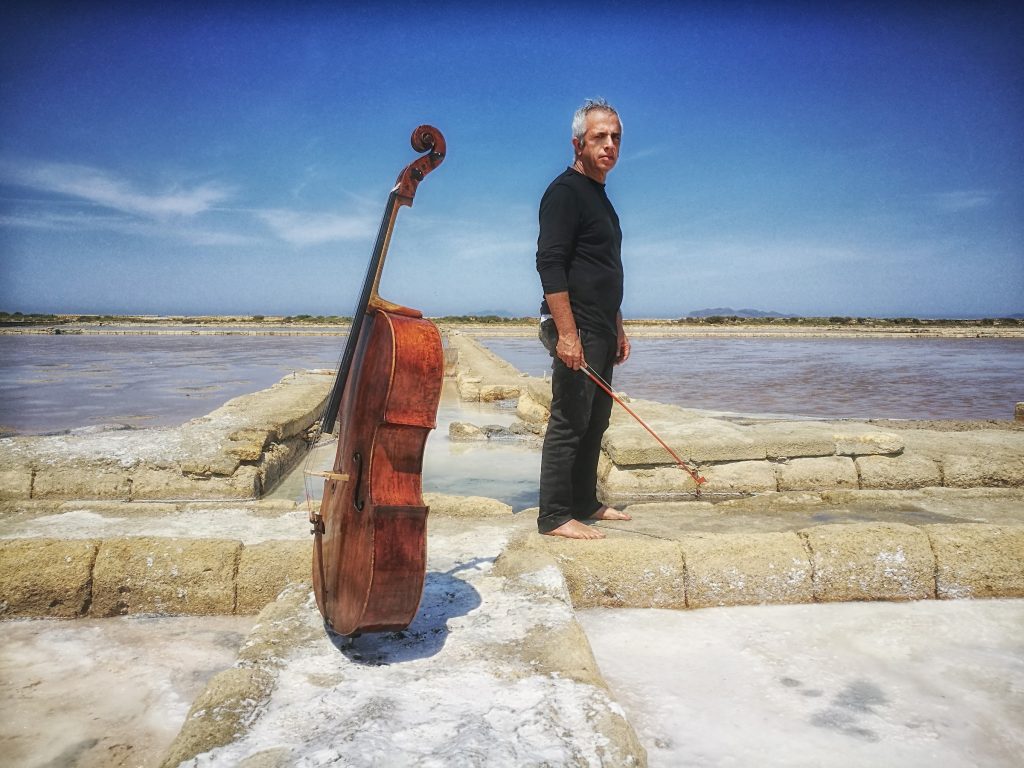
You play a cello by Francesco Ruggieri, built in Cremona in 1679. What has an instrument almost three hundred and fifty years old taught you, and what do you think you’ve taught it?
It’s as if it had pointed out to me the presence of a forgotten, hidden repertoire, running from the end of the seventeenth century to the early nineteenth. The missing links. I don’t know if I’ve taught it anything, but I certainly perceive it as a beautiful boat travelling through time and space and, along with me, picking up every kind of sound from all over the world, even the imaginary kind. So yes, it’s modern!
For N-Ice Cello you played Tim Linhart’s ice cello. How does the gesture change when the instrument melts under your fingers and every note wears it down a little?
It changes enormously. The weight, the breath, which can disturb the ice itself, the timing of action and reaction, slower, softer, rounder. It’s an almost shamanic dimension. And rather than melting, if a crack forms, it explodes under the weight of four strings.
You studied composition with your father Eliodoro. What is the thing about the craft you learned at home that no conservatory would have given you?
The rules, and getting rid of them right afterwards. And tackling every kind of music without closed doors, improvisation included. Dad also taught me to “see” music, to perceive its visual, or visionary, component.
You’ve said the market makes you feel at home, in Palermo as in Istanbul or Sydney. Which street voices actually ended up in your scores, and how did you transcribe them?
All of them. And it’s still like that.
In 1993 you wrote a Requiem for the victims of the Mafia. What can music without words do in the face of a civic wound, and what can it not do?
Words can have the limit of rhetoric. Music is a gesture, a furrow. Unmistakable and powerful.
In 2013 and 2014 you conducted the Notte della Taranta, in front of a piazza that dances. What did the pizzica teach you about the rhythm and the body of the listener, and what have you brought of it into written music?
I still have it attached to my body, after so many years. Putting folk music into notation is almost always a difficult experience, and I’ve done it on other occasions, in the most disparate places, from the Balkans to Australia. In reality you have to synthesise, with a clear, simple notation, because there is a lot of data: the interval system, the rhythm, the text, the improvised parts, the stanzas, the verses, the drones or harmonic patterns. And all of it on a couple of staves. I also worked on the arrangements, never binding or rigid, open to reworkings, to improvised interventions and whatever else. At the time, annotating and archiving, I wrote a sort of “Salento Book” with two hundred pieces, maybe more, and I never published it. It looks like a map: you can really hear what the Adriatic brought, from Albania, from Greece, from Sicily, and what the Ionian brought.
You’ve played Carnegie Hall and the Knitting Factory. What is the difference, for the hands and for the breath, between an audience sitting in silence and one that drinks, talks and moves?
I love an audience that lives the music without stiffness, so the one that drinks, talks and moves. But actually I have no problem with either, and my audience, I’ve understood now, is a perfect synthesis of both. When I play the Bach Suites, among the listeners I find metalheads too.
Your music has passed through the hands of Yo-Yo Ma and the voice of Patti Smith. Has there been a performance that made you discover in your piece something you didn’t know you had put there?
Let’s say I discover new clues every time, even when I’m the one playing my own music. For sure, many years ago, I was surprised, happily, by the reading Riccardo Muti gave of a long piece of mine called Passiuni.
In Turin, in Tucidide, Atene contro Melo, the hundred cellos became war drums. When the cello stops singing and becomes percussion, what happens to its character?
The cello can truly evoke anything. Sensual, delicate, percussive, intense, distorted, rock and roll. It sings, weeps, laughs, screams. It speaks.
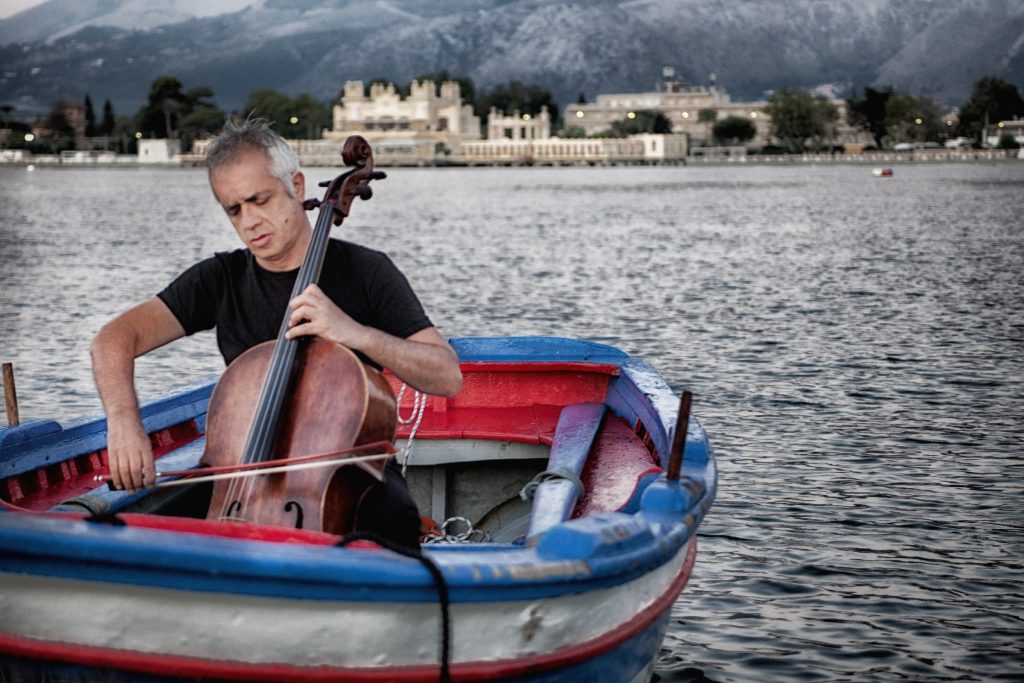
Since 2010 you’ve taught at the Accademia di Santa Cecilia. In a young cellist, what do you correct first: technique, posture or fear?
Fear, if it’s there. Then I try to understand their signature, their true voice. And their desires too. That’s what I work on.
Classical, rock and Mediterranean music have always lived together in your work. Does the border between art music and folk music still exist, or has it survived only in concert programmes and at box offices?
It has survived in the heads of those who haven’t understood, or are afraid. The box offices are further ahead, the audience further ahead still. But I don’t talk about it any more. I talked about it thirty years ago, and now it seems ridiculous to me to keep on reasoning about it. I just get on with it. Maybe my programmes show it, and they aren’t even that new.
On 15 November you’ll be in Sala Santa Cecilia with the Orchestra Notturna Clandestina. What will you play, and what do you expect from a concert hall that for one night becomes a rave?
I expect a healthy, liberating event, as it has always been. I launched the Clandestina ten years ago, and from that incredible live show a record was born too. We always need evenings like that, and here I’m tying back to the previous question. What I’ll play I don’t know yet. Maybe it will be a surprise.
Is there something you want to say that we didn’t ask you?
How are you?
The Classical Rave Party, Sunday 15 November 2026, 8 pm, Sala Santa Cecilia, Auditorium Parco della Musica, Rome. Romaeuropa Festival.