

Heiligenstadt, today, is the nineteenth district of Vienna and you get there by metro. In the autumn of 1802 it was countryside, six kilometres outside the walls, a place where doctors sent patients who needed quiet. Beethoven arrives in spring, on the advice of his doctor Johann Adam Schmidt, and stays until October. On 6 October he writes four pages that he will never send to anyone.
They are addressed to his brothers. At the top it says: for my brothers Carl and, followed by a blank space. The name of the second brother, Nikolaus Johann, he will never write, there or in any other family document. Beethoven was thirty-one, born in Bonn in December 1770.
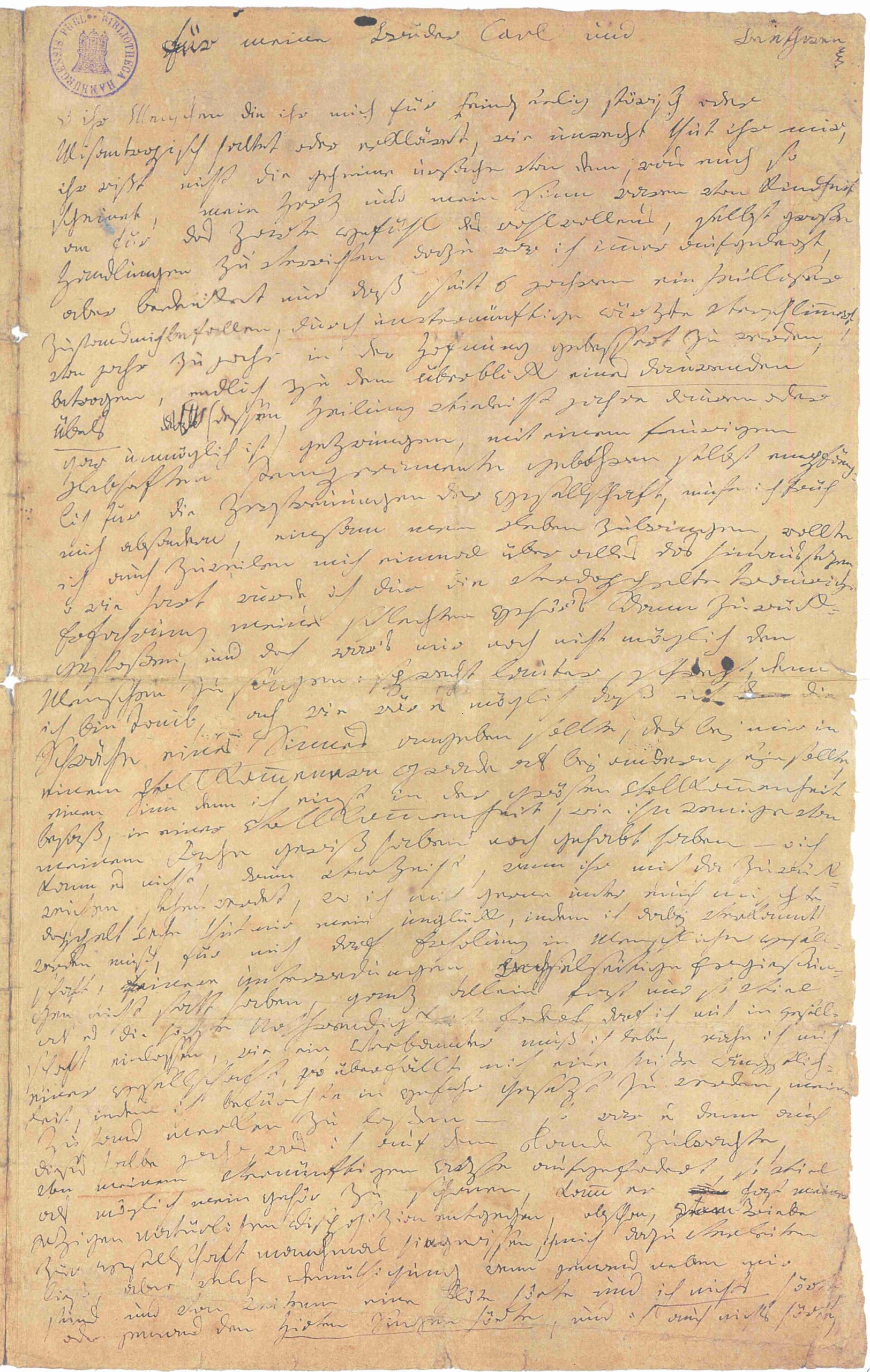
In the text he says, in essence, three things. The first is that anyone who judges him hostile, surly or misanthropic is mistaken, because he does not know the cause. The second is what the cause is: for six years he has had an incurable condition, made worse by incompetent doctors, and he has had to live in isolation because he could not tell people speak louder, shout, I am deaf. The third is the hardest: he writes that the idea of killing himself was there, and that the only thing that held him back was the feeling that he could not leave the world before producing everything he felt he had to produce.
In the middle comes the episode that the document renders unbearably concrete, and it is the reason this letter is worth more than a hundred pages of psychology. He tells of being in the countryside with someone who heard a flute in the distance, and he heard nothing. And someone else heard a shepherd singing, and he heard nothing. He adds that such episodes brought him close to despair, and that it took little for him to take his own life.
There is a practical request, at the close, that reveals how little the letter is an outburst and how much a document drawn up with lucidity. Beethoven asks that, after his death, Professor Schmidt, if still alive, describe his illness in writing, and that the account be joined to those pages, so that at least the world may make peace with him. He is organizing his own posthumous defence. At thirty-one, in the midst of a crisis he describes as mortal, his concern is the archive.
On 10 October he adds a shorter postscript, and from that moment he does not touch the sheet again. He puts it away. He returns to Vienna. No brother reads it, no friend hears of it, nobody in the following years hints that they know anything about it.
And here is the fact that puts everything else in order, and which should be taught to anyone who believes that art is the diary of the person who makes it. In the months in which he writes those four pages, Beethoven is finishing the Second Symphony, Opus 36, in D major. It is the most brilliant and the most easygoing work he had written up to that point, with a finale that sounds like a laugh. In the same period come the three Sonatas Opus 31, the three Violin Sonatas Opus 30 and the Variations Opus 35 on the theme from Prometheus, which will later become the finale of the Third. No one, listening to that music blind, would guess the date.
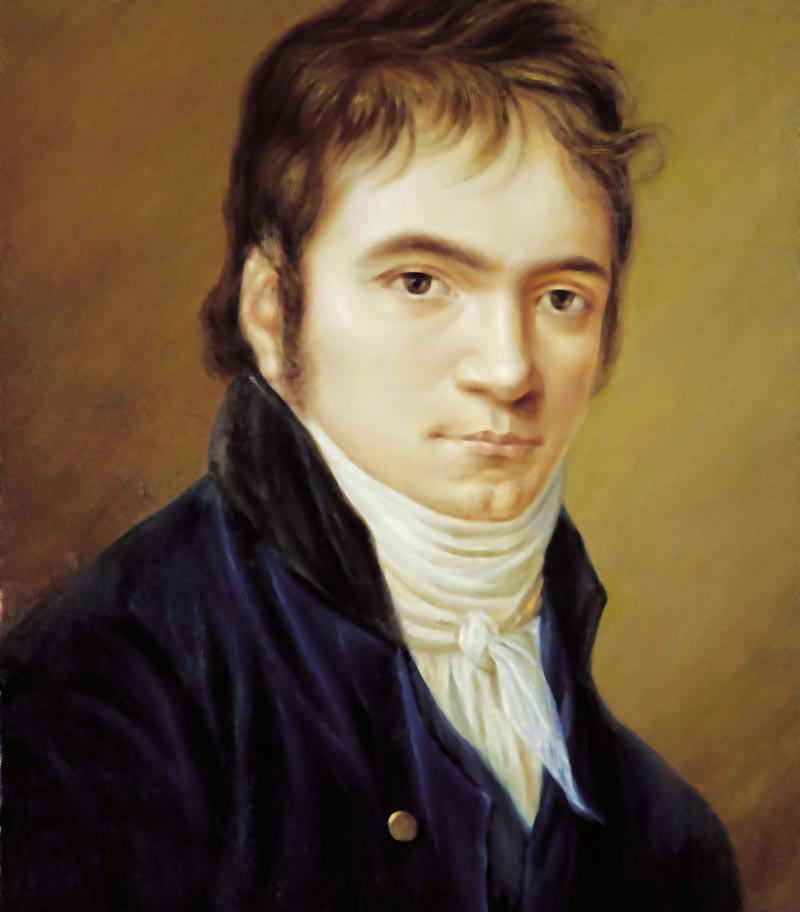
The letter resurfaces in March 1827, right after his death. Those who go through his papers find in a secret drawer of a piece of furniture two documents: those four pages, which had lain there for twenty-five years, and the love letter with no addressee, written in 1812, that we now call the letter to the Immortal Beloved.
On 17 October 1827, seven months later, Friedrich Rochlitz publishes the Heiligenstadt Testament in the Allgemeine musikalische Zeitung of Leipzig. From that day the figure of Beethoven that nineteenth-century Europe builds for itself, the deaf man who defies fate, has a precise source, and it is a sheet that its author had decided not to let anyone read while he was alive.
The autograph passed through several hands during the nineteenth century, also going through the singer Jenny Lind, and ended up at the Hamburg State and University Library, where it is now. The deafness went on. At the premiere of the Ninth, on 7 May 1824 at the Theater am Kärntnertor, Beethoven was on the stage beside the conductor Umlauf, and at the end they had to turn him towards the hall so that he would realize they were applauding.