

by Enrico Melozzi
This is installment five of thirteen. The thesis is in installment one and does not change. What follows serves to prove it.
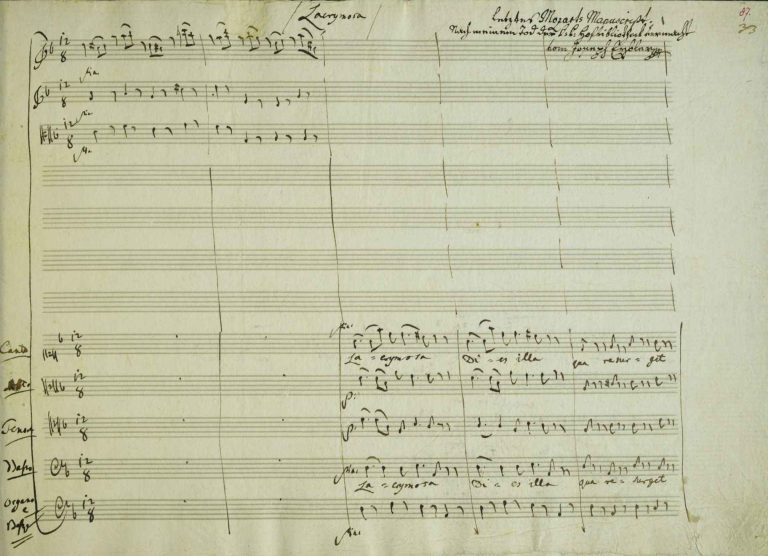
Vienna, Austrian National Library, manuscript reading room. Whoever is allowed to consult shelf mark Mus. Hs. 17.561 arrives sooner or later at the sheet everyone comes to see: the Lacrimosa. Eight bars. The strings swaying, the chorus rising twice, the crescendo that opens on the eighth bar, and then the blank. It is the most powerful image in Western musical mythology: the pen that stops, death entering the page. The moved visitor, however, usually does not make the move any archivist would make: turn the sheet.
Because the document, here, is the physical sequence of the papers, and the sequence says one precise thing. After the interrupted Lacrimosa, the manuscript continues: the Domine Jesu, autograph, with the voices complete and the bass, the fugue of the Quam olim written out in full; then the Hostias, autograph too, up to that cross-reference, quam olim da capo, from which this inquiry started. Mozart, that is, wrote music that in the liturgy comes after the Lacrimosa, and wrote it after having stopped at the eighth bar. We do not know with absolute certainty the order of the working days, and it must be said honestly: the internal dating of a particella is not a clock. But the material picture is incompatible with the scene in the film: no pen fell on that sheet. The man who left it blank moved on, and kept working.
There is a second document, which resurfaced in the twentieth century, that complicates the legend and enriches the picture: a sheet of sketches now in Berlin, recognised in 1962 by the philologist Wolfgang Plath, which contains among other things the draft of a fugue on the Amen, evidently destined to close the sequence after the Lacrimosa. So Mozart had not only gone on: he had also planned, in note form, how the section that the blank sheet seems to leave in the void would end. The picture that emerges is not a man surprised by death mid-phrase: it is a building site with several fronts open, where a precise gap coexists with the plan for its closing.
And now the hypothesis, which must be declared as such and as such repeated, because this is the chapter in which our inquiry exposes itself most. The facts listed so far are documentary: the interruption at the eighth bar, the autograph Offertorium that follows, the sketch of the Amen. What follows is an interpretation, ours: Mozart stopped on purpose. In a work destined for another man’s signature, as installment four showed, the eight bars of the Lacrimosa were the point at which delivery stopped being craft and became gift: the piece most truly his own, the one a composer recognises as it comes out of his pen. The hypothesis is that Mozart did not want to give that core to Walsegg’s name, and set it aside, suspended, awaiting a context in which he could sign it. We cannot prove an intention: intentions leave no watermarks. We can, however, observe that the hypothesis of voluntary suspension explains all the material facts, while the hypothesis of death mid-phrase is contradicted by the papers that come after.
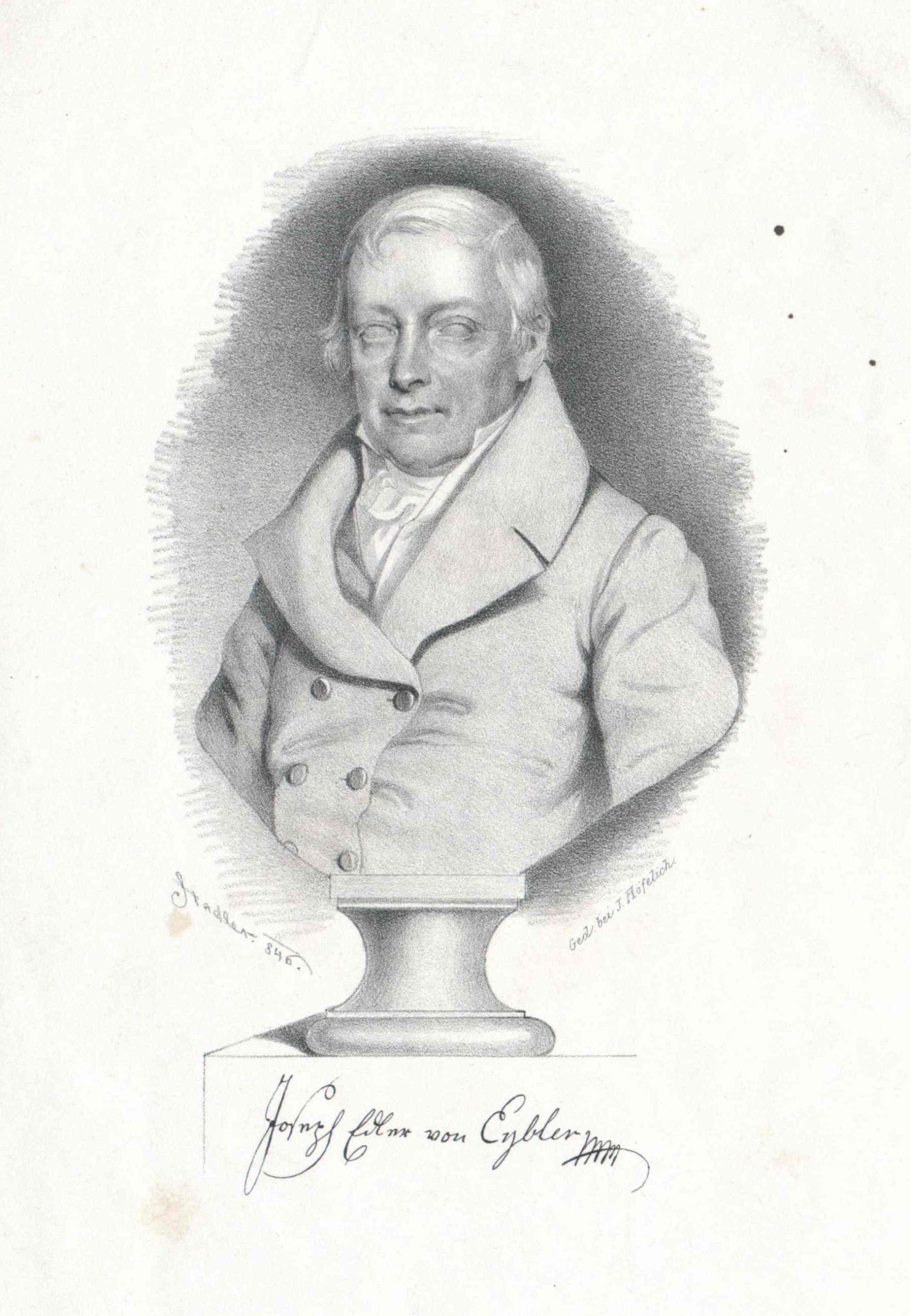
A side clue deserves to be entered in the record. When Constanze entrusted the sheets to Joseph Eybler, on 21 December 1791, the young man confidently orchestrated the sequence on the staves Mozart had left empty, up to the Lacrimosa; on reaching it, he wrote two bars and stopped, returning everything without explanation. Faced with the other movements, a competent professional had found sufficient instructions; faced with that sheet, the first who tried felt he was in different territory. Let each read this silence as he sees fit: we record it, without loading it with more than it weighs.
The last fact is a measure, and it closes the installment. Eight bars of a homophonic chorus with figured accompaniment contain, for a 1791 workshop, everything that is needed: the key, the theme, the character, the voice leading, the model of the accompaniment. Eight bars are enough to give the indication to a copyist, and not enough to lose the piece.
This chapter is part of Enrico Melozzi’s inquiry into the Requiem. Installment six comes out on Wednesday 16 September at 6:30 pm, and measures, syllable by syllable, forty-six bars written in a spa town in June 1791.