

by Enrico Melozzi
This is instalment eight of thirteen. The thesis is in instalment one and does not change. What follows is meant to prove it.
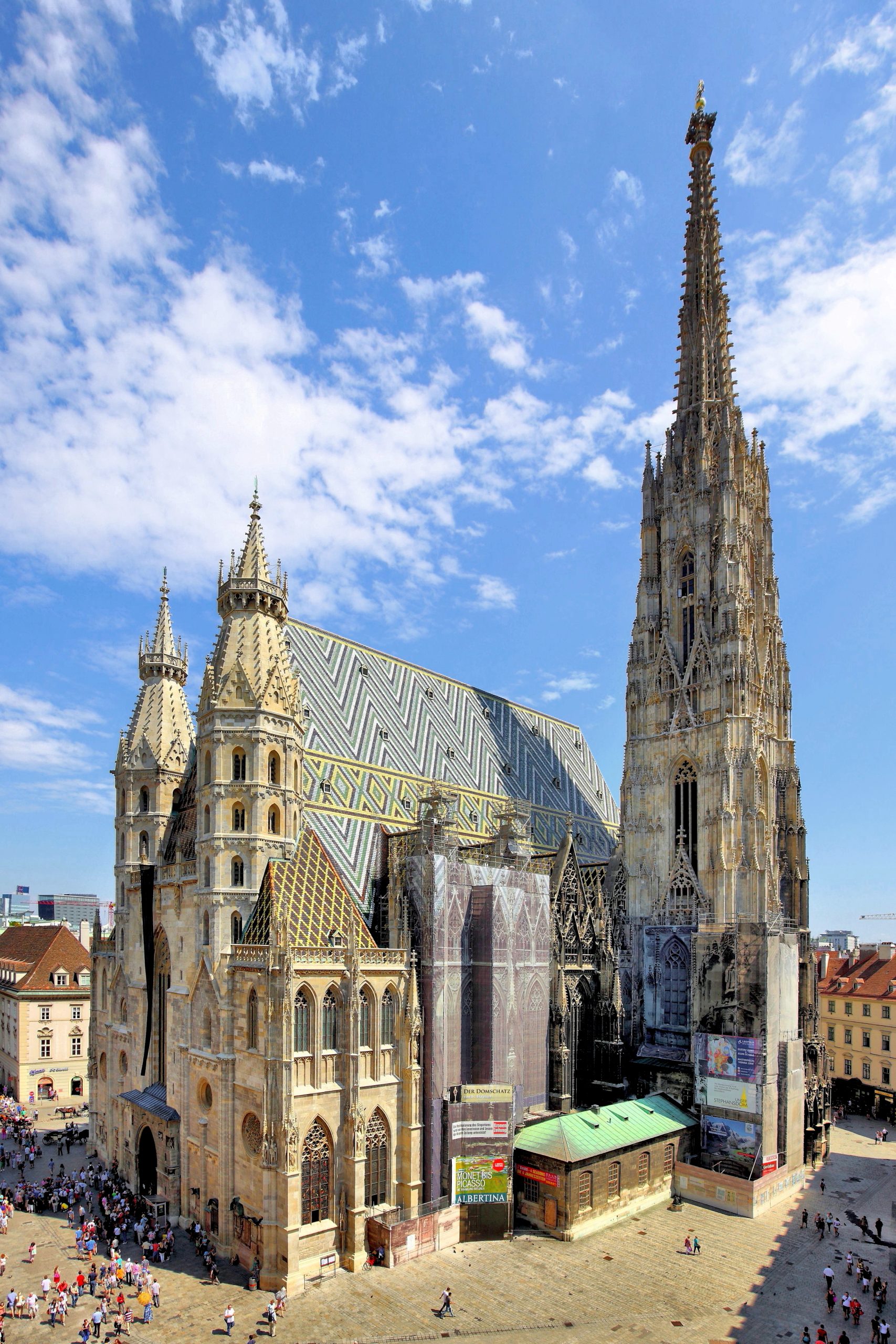
Vienna, city hall, spring 1791. Among the petitions reaching the Civic Magistrate is one signed Wolfgang Amadé Mozart, chamber composer to the imperial court. He is not asking for money, and that is the point on which the whole document turns: he asks to be appointed adjunct, that is, unpaid assistant, to the Kapellmeister of St. Stephen’s Cathedral, the old and ailing Leopold Hofmann, offering to serve him for free in exchange for a single clause: the right to succeed him when the post falls vacant. On 9 May 1791 the Magistrate grants the request and signs the decree. The paper exists, registered in the Viennese civic records, and it is among the most cited and least pondered documents of Mozart’s last year.
It pays to ponder it. The post of Kapellmeister at St. Stephen’s was the summit of Viennese sacred music: a salary of around two thousand florins, plus benefits, well over double what Mozart took from the court, and above all a stable institutional position, with a chapel, an ensemble, a liturgical calendar to feed every week of the year. Mozart, who was thirty-five and had debts on their way to being paid off, made the move of a man who plans: he got in line for the future, paying for the antechamber with free labour. Hofmann, for the record, lived until 1793: the succession never came. But in May 1791 nobody could know it, and decisions are judged by the information of those who make them.
The argument of this instalment takes down the last beam of the romantic reading: the idea that the Requiem crashes into the life of a man of the theatre by now estranged from the church, like a summons from the beyond. The calendar of 1791 tells the exact opposite. In April Mozart petitions for St. Stephen’s; on 9 May he gets the appointment; five weeks later, on 17 June, in Baden, he writes the Ave verum, the motet of instalment six, his first completed liturgical piece in years; in the summer comes the count’s commission, which we know from instalment four. The Requiem, within this sequence, is not an omen: it is one piece of the puzzle. A musician who has just secured the succession to the most important chapel in the empire knows that he will soon need a sacred repertoire of his own: masses, motets, and, for the funerals a cathedral celebrates continually, at least one requiem mass. The anonymous commission from Stuppach, seen from this desk, was also a chance to build stock: funeral music paid for by someone else, destined for someone else’s signature, but whose material, in the head of a workshop man, would come in useful for the career he was building. We cannot prove this thought, and we do not pass it off as a document: but we can prove, papers in hand, that the context in which the Requiem was born was a life that was returning to church by the front door, with full municipal registration.
There is also an outside confirmation, and it comes from witnesses in the circle: in his last months Mozart spoke of sacred music as his next territory, and the widow herself, in the following years, recounted the enthusiasm with which her husband looked towards the new appointment. These are partisan testimonies, like almost everything Constanze touched, and instalment nine will settle accounts, literally, with her management of memory. But here they converge with the papers, and when papers and witnesses say the same thing, the inquiry takes note.
The last fact lies in an interval of thirty-nine days. On 9 May 1791 Mozart obtains, at his own request and for free, a post in the most important church in Vienna. Five weeks later he was writing the Ave verum.
This chapter is part of Enrico Melozzi’s inquiry into the Requiem. Instalment nine comes out Friday 25 September at 6.30 pm, and opens a book that nobody opens willingly: the widow’s account ledger.